


February 2026
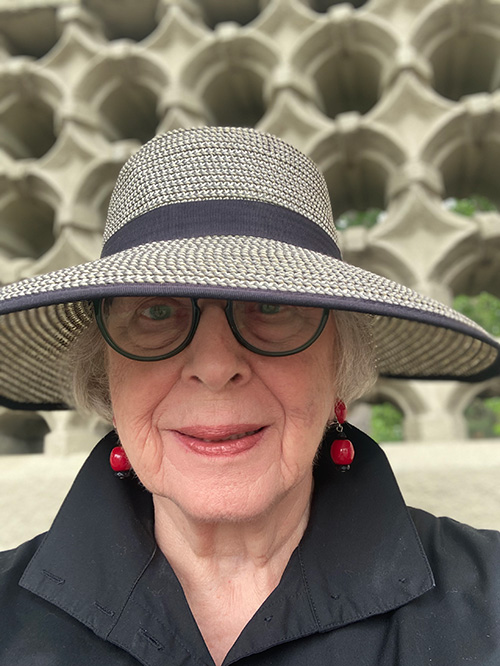
To call something a cult work means to outline how limited its popularity is rather than to stress its mass appeal, but to call someone a cult artist informs such a person with an air of utter respectability – and that’s how it’s been for Dorothy Moskowitz. Remembered mostly for her late-’60s stint with THE UNITED STATES OF AMERICA, psychedelia avant-gardists who didn’t seem destined to have a lasting effect on music world yet left quite an imprint on many a mind, she quit show business for good a few years further down the line, although not before contributing to a few more records, only to see the renewed interest in her oeuvre, which prompted the now-retired lady creative renaissance. In recent years, Ms. Moskowitz’s collaborations proliferated, each new one different from the rest, so there’s no lyrical or melodic rut for Dorothy to get stuck in, and sharp as ever and rising to any intellectual challenge life may throw her way, she doesn’t seem to slow down any day soon.
– Dorothy, were you surprised that "The United States Of America" – the band’s only, not-too-pop kind of an album – became so famous?
I had hoped, when we first recorded, that we would make a dent in the public awareness, and I’m not sure what prevailing winds or what rising signs and what planets made this thing, but it sank badly. We were briefly celebrated, and we had a short tour, but the album sank like a stone. There are so many reasons why it didn’t flourish, but there were so many reasons why it should have flourished, and going back almost sixty years I can’t remember all of them.
– You were a serious musician – so why did you decide to join this group with, basically, pop aspirations?
I didn’t exactly decide to join. The antecedents to THE UNITED STATES OF AMERICA are probably not what is talked about very much. I met Joseph Byrd in New York in 1963 through a mutual friend, at a concert. I was working for a record company, and the producer at the entire company would give out free tickets to wonderful venues if a particular artist was not going to draw. My boss was the producer for Julian Bream, a little-known lutenist who had a concert at Carnegie Hall, and I went there alone, but I sat next to a woman with whom I’d gone to college and who was in an a cappella group that I’d actually led. She was sitting with Joseph, and we sparked and became a couple – we had a serious romantic relationship from that point on for about three years. During that time, before THE U.S. OF A. was born, Joseph was very, very well-known in the avant-garde circles of New York. He traveled in wonderfully intriguing circles. He was very close to John Cage and had done liner notes for one of Cage’s albums, and he was very friendly with Yoko Ono. He introduced me to Max Neuhaus, to La Monte Young, and his wife, Marian Zazeela, and I had been exposed briefly to Stockhausen.
All of this was very glamorous to me, but then, when we were living in Los Angeles, our relationship dissolved. I went back to New York, and he started THE U.S. OF A. with some artists at UCLA. Joe asked me to come and be in this band, and since we were good platonic friends by then, I decided to do it. Reaching back, my expectation was that we were going to be an experimental band, very much in the same color that those early experimental things were in New York, that we would do happenings, that we would do provocative things on stage, that we would ask the audience to make sounds of their own. I had it in my mind that we were going to be continuing the Judson Church kind of scene that we would embed, that we would infuse our performance with that aesthetic, so I was quite surprised that Joseph was determined to be a pop artist at that point. I was a little bewildered, but I went along with it. So yes, you’re right in the sense that I joined what was a pop band, but the antecedents, the lack of follow-through on what I had expected was, for me, one of the strong things that made the band come apart. Had we been true to our roots, we would have had a much more loyal following, and that might have helped us overcome some of the internal conflagrations that made the band difficult.
– You mentioned Yoko Ono. She and Joseph Byrd were part of the Fluxus movement. Were you interested in it?
Joseph was very active in Fluxus, and I think some of his work is actually published in the Fluxus documents. You can imagine the attraction that Fluxus could have held for an outlier like me. I was a collegiate songwriter, I was very straight, but I had written music, and I had gone to a Stockhausen concert; that was my calling card.
– So how did you see music when you became part of the band: as something that should have been intellectual, not only entertaining? Or it was to be in equal measure entertaining and intellectual?
I don’t know if I was thinking anything. I’m not sure what I was thinking. All I can confess to is, even though I felt I had a flair for melody, and lyrics came easily to me – I had already written two theater pieces when I was at college – I didn’t then, nor do I now, find the theme, the premise, and Joseph was a genius at finding the premise. He would come up with the title of a song, he’d write the first two lines and give me enormous freedom to write the rest, and it was so exciting! I didn’t know what category we were in when we first started, but we became psychedelic as a marketing ploy. The word “psychedelic” had not even been used. (Laughs.) I think they invented it to characterize something that, up until that point, had no title. Was it intellectual? Maybe
– Did you see yourself at that point, as a musician who could have gone to some, if not symphonic, then avant-garde heights?
The kind of performer I really was at heart was a jazz singer. I had been influenced more by Chet Baker than any other singer living at the time. If you listen to my voice and to my phrasing, you can hear that I did not have the upper register to perform classical music, and at one point I even wanted to do musical theater, because my voice was way too smoky, way too low. I might have been seventeen or eighteen when I got the “Chet Baker Sings” album – and I still have it. After all these years, it’s still in my cabinet; that’s how powerful an effect he had on me – the way he ended his phrases, the way he approached words is still very much a part of me. So there was that jazz aspect that I took seriously, and there was the other aspect, which was not truly intellectual but had more of an openness to, shall we call it, Dada or Neo-Dada.
Joseph introduced me to a fellow named Ray Johnson, who at the time was a pretty obscure artist and who I think might even be obscure now; he would send little snippets of pieces of paper or postcards to people, you would return other things, and months later he would come back having produced a collage that pulled together things that you had written and things that he had written. And the thrill of it, looking back upon the thrill of getting a postcard from Ray, was like getting an emoji on Internet now, because there was no Internet, and there was no way to do that sort of randomly collected observation and send it through the mail and then get it back. I looked him up more recently in connection with other things, and I found that it was called the New York Correspondence School – but I didn’t know it was a school! It was just somebody that Joseph had introduced me to whom I fell in love with from afar, and Ray Johnson still inspires my choices with whom I collaborate. All the people in my wonderful world of collaboration are either somehow collage-oriented or Dada-oriented, or involved in breaking the bounds of conventional formatting. So again, no: I was not intellectual, but I was very smitten with the New York School of art, and I had a jazz voice – and that puts me in a different category from classical training. I didn’t have that. I was self-taught, I had high school harmony, which I think everybody ought to be required to take, and I had maybe four years of piano lessons and a year of jazz piano with John Mehegan,
– And you studied under Otto Luening. How did his music manifest itself in your writing or in your approach to music?
Otto Luening was a music professor at Columbia, and I was a student at Barnard, and Barnard – that’s the Women’s College of Columbia in New York – had an event called Greek Games, which was a competition between freshman and sophomore classes. Every year, they would choose a different myth and reenact a combination as an ode to the particular character involved, and that involved athletic activity: you would do discus, javelin and something else, but there was also dance and music. And I think it was in my sophomore year that I signed up to help write the music because I was already writing songs at that point. I thought, “Oh, I can do this!” (Laughs.) So I went to a meeting with Otto, who was the faculty advisor to the composers for Greek Games – I went to his office with eight other people, and he started talking about what it was like to emulate Greek music and the nature of modes and how they came into European music. I was fascinated, and I went to the next meeting, and there were three people who came back. Then I went to the next meeting, and I was the only one. So for the next month and a half, maybe two months, I had private lessons in composing with Otto Luening!
What he taught me, more than anything, was audacity. He said, “Go with what your ear tells you to write. It doesn’t have to be a formula. Nobody knows what Greek music was. Just go with it!” And when I finally submitted my score to him, he said, “Well, this is all very nice, but we need to dress it up!” He hired a professional piano player, because I didn’t really want to play that music, and then a timpani player, so that it sounded like something out of 1925, like something out out of an Isadora Ballet. And I won for my class. We had a very close score, and they lofted me on their shoulders with a laurel wreath on my head, like I was some kind of athlete. All the athletes were up there on shoulders, and the musician could be up there, too! (Laughs.) So it was a phenomenal experience, and I credit all of that to Otto. The next year I was no longer in the competition, but I was asked to usher him so that he could attend the Greek games, and we spent a long day together; he was so witty and so low-key, and he was kind of gossipy – I loved him! He was really a wonderful, wonderful man. No pretensions at all.
– Did you manage to study and then apply Mixolydian and other Greek modes in your, so to say, pop career?
Oh, absolutely. Absolutely. Most of my improvisational work is modal. Listen to “Cloud Song”: it is a raga. When I left to go to California with Joseph, he was going to be in the ethnomusicology department at UCLA and study Indian music, and I was going to be on an unnamable adventure. I had no idea what I wanted to do, except I had been to some concerts in New York where Dizzy Gillespie played, and I wanted to study Afro music. So I walked into the Afro department down in the basement of Schoenberg Hall at UCLA, but the man who was teaching African music would not let women touch the drums! “Well, what can I play?” “Oh, you can play the gangan!” It was a two-headed percussion, side percussion instrument. I never got angry, though. I never stomped out of there. I quietly folded my books, walked down the hall to where Joseph Byrd was studying, and since we were partners at the time, sat down there. I met a woman named Gayathri Rajapur, who became my teacher and, later, a housemate to Joseph and me. And from then on, I was a student of Indian music. I had no intention of doing that, but because the African guy was so misogynistic, I found myself in a wonderful place. (Laughs.)
– Given Joseph’s political views and this misogynistic stuff, why didn’t you join this line of women like Clara Zetkin and Rosa Luxemburg and rebel?
We used to call it “boring from within” (laughs) : you play the role, you wear the stockings and the suit, you get a job in conventional industry, and you make your way through. You inveigle. I was with Joseph until 1966, then we broke up and I returned to New York, at which point I was imbued with left-wing hopes because the Vietnam war was so terrible – a lot of people were radicalized because of it. I was not necessarily left-wing until that point, but there was no other game in town in view of that war. So I got a job with The Harris Poll. Louis Harris was an opinion research maven, and I had majored in government [studies] at Barnard, so I had a background for getting into that. I became a statistical editor, the low man on the totem pole. I was the one who would take out the slide rule and make sure that the people who didn’t answer were reformulated into those who did and that everything was shipshape. But when I asked Lou, why he left out a certain part of the audience because they had different views about Vietnam than what he was publishing, he tore into me. I really thought I could bore from within and talk to him and make him change his mind, but I couldn’t – he was very, very conventional.
The one person who really surprised me at that time, though, was Walter Cronkite. He was a major, very well respected newscaster, and a good friend of Lou Harris’s. There was a midterm election in 1966, and it was back when computers were not very reliable, so they hired all the underlings to come into the studio as it was being broadcast to back up the computer. Being a statistical editor, I was one of the backup people with a clipboard, running around correcting and doing administrative things. And then, in walks this woman who was not boring from within: she had bushy black hair and a lot of jewelry, and she dressed absolutely in hippie fashion – there was no question what her colors were. She was way left of center, and she was going to get to Cronkite and see what’s what. I thought there would be a conflagration, so I stepped back, watching all this happen. Walter Cronkite sat this young woman down and explained, very quietly, as to how he was going to report on the war and what he was doing. And I thought, “What a gentleman!” He may not agree with her, but he certainly didn’t tear into her the way Lou had torn into me. It was quite an eye-opener!
– So the class on feminism that you taught came from your personal experience? It wasn’t simply theoretical stuff?
It was not theoretical. That class had nothing to do with UCLA – it was in the New Left School of Los Angeles that Joseph and I started in a tiny room rented in East L.A. What I wanted to do was make people aware of misogyny in the media. Everybody was supposed to bring in clippings of things where women were treated as objects – objectification was one of my things – and examine the media and what personal responses we had. The women didn’t want to do that; they wanted to talk about equity in terms of pay scale and why they were not making enough money. The whole agenda changed because of what they were much more interested in: it was not about identity, it was about money. None of it was particularly theoretical – both items were on the practical side. So I had come in with one idea and then to change what I was doing.
– When you started to play instruments and perform, did you see that as a form of expression or just having fun?
It’s always expression – you can’t have fun when you’re playing an instrument. It’s not your job; it’s the audience that has fun. Your job is to express and to try and bring what’s deep in you, connecting with somebody or something. You’re connecting, and it’s a heightened experience: Going to a concert and clapping my hands – that’s fun for me; but when you’re on stage… Well, I don’t remember what it’s like to be on stage. I remember the backstage, whom I met, what I wore, what day it was, even the weather, but once you’re on stage, some other part of the brain takes over, so I can’t tell you what I was feeling, and whether it was fun or not. No answer. I don’t know.
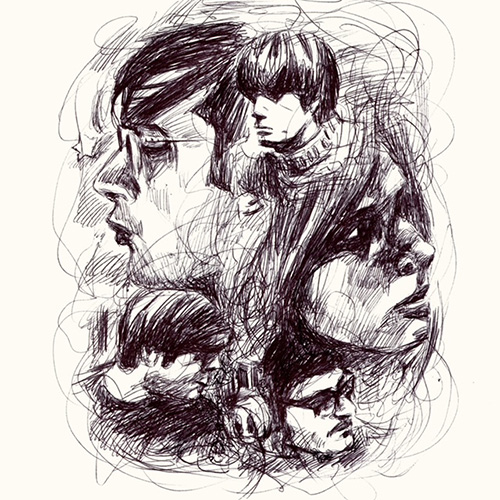
sketch by Dan Abbott
– How many instruments do you play?
I certainly don’t think of myself as an instrumentalist. At the time, I could play piano, but I don’t play much guitar. When I retired, I spent many years teaching, and I was teaching elementary trumpet in all the public schools in Piedmont, so I can sort of wiggle my way around a brass instrument, but not very well. But once, one of my colleagues asked me to substitute in her string classes, and since I was blisteringly ignorant, I said, “Help me. Find me a teacher!” – and they found me a teacher, simply to learn how to hold the physics of a string instrument. But after about four weeks, he said, “You have enough musicianship. You play the keyboard, you read, you sing. Why don’t you try it?” I said, “Oh, no, no, no, I’m too old!” I might’ve been sixty-nine at the time. Only he said, “No, you can do this!” – and four years later, I was playing viola in the local women’s symphony.
– At the time, you had performers like Grace Slick and Janis Joplin in California, and each of those women had a very strong stage personality. Did you also try to express your outlook as a woman through your music?
I was different. I didn’t realize that charisma was so important – and I didn’t feel that I’m a woman in a man’s world, although there was certainly a male dominance to the band. I look back and realize that, yes, I was the chick singer. They did not understand that I had written music, that I had been a composer in college, and that was painful to me that I had to be as pretty as Grace and as charismatic as Janis. And it wasn’t enough to have simply been a songwriter, which is what my identity at the time was: I’m a songwriter, and I have a pretty nice voice! But yeah, there were some issues for me personally to be not recognized. Fifty years later, several people in the band say, “Oh, we didn’t realize you wrote so much of it. Oh, you were wonderful, Dorothy!” They never said that to me back then. It was like, I didn’t quite have the look, I didn’t quite have a dress, I wasn’t very good on stage. Now, three years after, I was very good up there because I wasn’t responsible for anybody’s emotions as much as I had been. When I worked with Country Joe [McDonald], I was dashing on stage, I jumped around the piano, I stood up, I danced, I was much more free. With THE U.S. OF A., there was an inhibition.
– How did you feel moving from New York to Los Angeles? Was there any difference in attitude between the two places?
Boy, so many years later, I remember the excitement I had in leaving New York. I did want to get away from what I felt was a stiffness. My parents wanted me to marry a nice Jewish boy, and I couldn’t find one, so I was getting away from that onus of having to live up to a certain conventional patterning. And being in L.A., there was no patterning, I was living with a non-Jewish man. Good Lord, not even married at that time! It was quite scandalous. (Laughs.) The wonderful world of musicians I met there was very, very enriching. We did concerts that were almost like exporting a bit of the avant-garde to UCLA. Joseph was able to put together a group that we called the New Music Workshop – Morton Feldman played there, Stockhausen played there – so that was almost as exciting as being in New York, only without the trappings of “What have you done?” and “Where have you been?” It was much more freewheeling in a lot of ways, but Joseph did not experience that acceptance that I expected: people at the institute didn’t like him. He was just too much of a maverick, and I think he, unfortunately, suffered from that. But I was not enrolled in the music department, so I could do what I wanted.
– Talking about THE U.S. OF A., most people think about this influential avant-garde unit – but you actually played Fillmore West and Fillmore East, and Whisky a Go Go!
Oh, yes, yes. I felt we were going to be on the road with [the album], and I was very surprised that we couldn’t make a go of it, because it really looked like we were going somewhere. Where else did we play? We played the Cafe Au Go Go, the small club in the West Village that was really wonderful, but the Whisky was after THE U.S. OF A. broke up, and that was my band, the second U.S. OF A. We played at a very wonderful gallery in Washington, at Swarthmore College – a fabulous piano there. We played a lot of college gigs, where we were well-received. It was a small coterie, and we were very obscure.
And there was one issue that has never been brought up. Our producer, David Rubinson, couldn’t support us very well because he had a minor heart attack, so we were left without any guidance except our own manager who was not a musician. David was in the hospital, and we went on the road, but when we were actually in the city playing some of the major gigs, Columbia Records was not very nice to us. They wanted me to change my age – I was twenty-seven, and they thought that that was not marketable: I needed to be twenty-five and Joseph needed to be twenty-seven – and they did not want to issue “Love Song For The Dead Che” because it mentioned Che Guevara – they wanted us to call it “Love Song” which we did not want to do. They had all these stipulations that alienated us from them and they from us. Had David not gotten sick, that might’ve been one of the factors that could keep us on the road in a little better shape. There are so many elements to the end of the band that it’s hard to tell the story.
– But still playing the Fillmore should have been no mean feat.
I have a song that explains what happened at the Fillmore East. We opened for a group called THE TROGGS, a sort of a early proto-punk, heavy-duty hard rock band. Also on the bill was Richie Havens, who was extremely kind, very lovely, gentle person. But THE TROGGS fans were waiting for us to get off the stage so that they could cheer their band. It was a good group, but we should never have been on the same bill. So we begin to sing, and from the back row, we hear: “You stink!” Sixty years later, I’ve been trying to get the remaining members of THE U.S. OF A. to write music together and put something out, and it’s not working very well, but there’s one song that was started by our guitar player… We were never supposed to have a guitarist, but on the road, we used one, and that was Ed Bogas. Ed and I have remained friends, and he started writing a song about that event, “No Doubt About It”; it has not been released – someday it will be – but it tells the story of what happened at the Fillmore East and how the crowd heckled us.
As for the Fillmore West, I had gotten a case of strep, and my doctor told me I shouldn’t be traveling, so I stayed back, and the band was going to go up and do an instrumental show for Bill Graham, but he said, “If you do that, you’ll never play in this town again!” So the manager came back and got me on a plane, although I was still feverish, and I don’t remember the show very well. I should have come up there with an oxygen mask or something and asked the audience to take me back to the hospital, I should not have been on stage, but Graham was a tough cookie – always has been.
– You mentioned your voice. So you didn’t deliberately sing unemotionally to emphasize the strangeness of the music – you just used your voice as an instrument?
Yes, yes, definitely. I sang as though I were an instrument, but that was actually denuded emotion. When I was working with Francesco Paladino last year, I wrote to him and asked, “How do you want me to do this?” He said, “I want it dripping with emotion!” And so when you listen to any of the things I did after the US of A, I am intentionally trying to convey my depth. Now, with Joseph, it was quite the opposite. I had a natural vibrato, but he wanted me to erase it – he really wanted to draw the emotion back. He wanted me at plain song – he wanted that childish chanting, almost mixed-gender voice. So whatever emotion you heard in my voice, I had cauterized it. I was more estranged, more icy than I am now, and I don’t think I was projecting emotion on that album in the way that I am today, where if I sound too distant, I go, “Okay, change the mic! Okay, take a deep breath and walk around the block!” I do all kinds of things to dredge up my insides and show them.
– How do you think you influenced the sonic side of things with the band?
I did that by being enthusiastic about permutations to my voice. I wanted it to be an instrument and to have my voice modified. The violinist had a divider, so that he could play an octave up or turn it an octave down, and I was fascinated with that. I experimented with it and it sounded horrible. (Laughs.) And then someone brought in a ring modulator – not Tom Oberheim, it was someone else – and oh my lord! Although I did not have any real electronic ability, I had not really done splicing, it was my willingness and my sense of adventure that I lent to the band that made it sound unique in that way. I don’t know if Joe’s subsequent singers on his second album had that willingness, because I don’t hear ring modulation on those voices – those voices are recorded very pure. So when you ask what my sonic contribution was, I think it was my attitude more than anything else. I didn’t fancy myself a lead singer, I really didn’t want that. It’s very odd that I was thought of as a singer or as an electronic maven. I was an experienced lyricist, though – as I mentioned I had written lyrics to several shows that were performed at Barnard College – and I had written songs for children. So I was a songwriter with a decent voice; that’s really where I came from.
– What direction you were trying to take the band in on the second U.S. OF A. album?
I wanted it to be a hit. There were no hashtags back then to guide you in what style you wanted, but I wanted a more vernacular sound than what we had with the original band. And the people who surrounded me at that time, we were all like-minded about that. I don’t remember how many songs we recorded – some of those songs are on the reissue that came out in 2004 – but they were pretty good, and I don’t know why Columbia didn’t like them.
– Was that why you couldn’t finish that second album? Couldn’t you change the label?
It wasn’t official, but they just withdrew their support. There was no money to record, we had no session time, David Rubinson was moving on to other things. I had three songs recorded, and I got a test pressing, but that was the end of it. It was a very tough, tough moment in my life. When I think back to it, I don’t know that I had the energy or the moxie to fight the end of the album. It was not pleasant. I was too broken to look for another label, and I’ve known other singers in that situation who have ended their lives. I had such high expectations and all of a sudden I was thrown out the back door. I was bereft. I was way, way down. I was very poor at the end of THE U.S. OF A. – I had no resources, I was left with absolutely zilch and no contract and no hopes. So I took a day job in order to support myself, which was studying the effect of commercial responses, and I started having some income again. I had a new boyfriend, and we moved up to Northern California.
By absolute accident, I ran into Country Joe in a cheese store. He and I had played on the same bill – we had opened for him – and he came to see me at the Ash Grove; he also came, with Nico, to a party that I was at, so he remembered me. Two weeks later, his agent called me to audition, and that was the end of being depressed. From that point on, I’ve had a very, very happy life. I’ve never looked back at that ghastly moment of THE U.S. OF A. ending. I don’t think about it much.
– Given your state of mind before then, where did the “Reality is only temporary” line come from?
I think Joseph wrote that and then I came up with “A process imitating things that went before” and the other lines. I think the rest of them is mine. You’re sitting next to somebody at the piano bench writing words and you’re tossing ideas back and forth: those were the best times with THE U.S. OF A. when he still trusted me and I still respected him. There was a great, great bond that had been established because we knew each other romantically and that did not come apart until we were on the road and had a hard time with some of the travel and some of the internal warfare that was going on. Some of the people in the band were equally strong writers, they did not know about Joseph’s background, and I don’t think they respected him as an arranger the same way I respected him because I had known him at the height of his fame in New York City. I served as the mediator, as his supporter, when they attacked him. They did not like “The American Metaphysical Circus” – they called it “The American Metaphysical Bullshit”! They did not respect Joseph’s attitude towards new music – they were skilled craftsmen who did not have that much background in experimental arts, and I did. So it was Joseph and me against the band, and then little by little, he was being mean to some of these people and I saw their point. It’s a sad thing about Joseph; he could have had the world at his feet, but there were personality flaws that made it hard for him to get along with people.
– Did you get along with David Rubinson?
I met David in college – he auditioned me to play the part of Adelaide in the campus production of “Guys and Dolls” – and it was a kick working with him. He’s a very accomplished director. Then, he and I played together in a band. He couldn’t play guitar very well, so I think he tuned it to ukulele strings, but we had a really fine jazz pianist, and I sang club jazz several times with David. So we knew each other very well. When Joseph and I met, I was working for RCA Victor and he for Capitol, so he got me a job at Capitol Records, and shortly before we left for L.A., the people at Capitol wanted us to replace ourselves with someone – and because I knew David in college, I suggested that he be our replacement, and that was his entree into the recording industry. So I think he felt he owed us a favor, and two or three years later, when I was back in L.A. and we’d started THE U.S.OF A., he, as a producer, made it his business to be very welcoming to us, and he introduced us to Columbia Records, but in my heart of hearts, I think he was doing it to pay us back for the favor of giving him his start.
I’m not sure he really liked us the way we were. In fact, David wanted us to be more experimental, more confrontational. He liked the other founder of the band, whose name was then Michael Agnello – he’s now Michael Tierra – and who did the kinds of kind of Anti-Dada-esque things that Joseph really didn’t like, and David did not like the fact that Michael had left the band, so eventually, David and Joseph came to really distrust one another very much. David brought us to the attention of Columbia because we did show promise of being confrontational and rather weird, and Joseph wanted to drive us towards more conventional constructions, songs and melodic things, and I could go in either direction. Joseph irritated David, and David really stopped supporting a lot of what Joseph wanted to do. They were not friends. However, my relationship with David has always been pretty friendly, quite close. I was upset that he didn’t marshal his energies towards keeping me with Columbia, and so we drifted apart for a while, but we still write to each other.
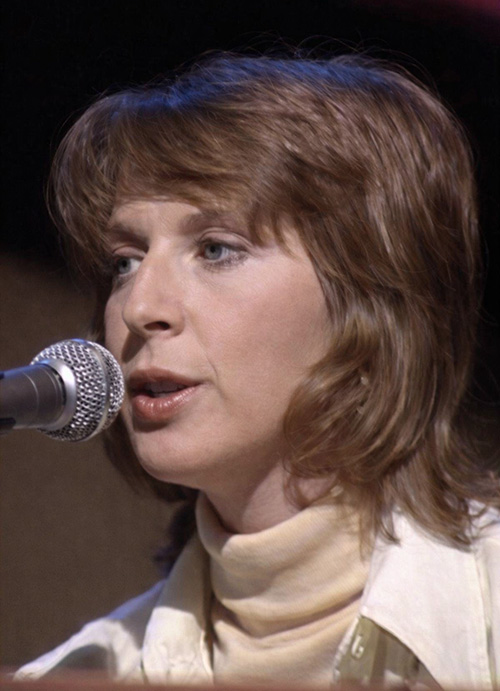
– You recorded with Country Joe in France, right?
Mostly in France and then we had a few follow-up sessions here in the States. The French studio, Chateau d’Hérouville – we called it Chateau Horrorville (laughs) – was the same place where “Honky Chateau” was recorded by Elton John, and it was a highlight being able to play the same wonderful piano on Country Joe’s “Paris Sessions” album. We were nowhere near Paris, but you don’t want to call it “Hèrouville Sessions” because nobody’s ever heard of Hérouville! I had a fabulous time: for me, this was very, very glamorous to be abroad with a name band. It was around my birthday, and we all went out to a bar, where I became friendly with a bass player, Peter Albin, who had played with BIG BROTHER & THE HOLDING COMPANY, and we continue to be close friends to this day – he lives pretty close to us. What Country Joe did was he put together people who were in other bands, and then didn’t have a name for it: we were originally Country Joe and Friends, and then we became THE ALL-STAR BAND because every one of us had recorded elsewhere. It was a wonderful experience.
– You also encountered JETHRO TULL in the Chateau. Did you notice any difference in attitude between American and British musicians – well, apart from THE TROGGS thing you mentioned?
I didn’t see any cultural difference, but I don’t remember being on a double bill with European bands that much, except for THE WHO – and they were such stars: they tumbled out of a limo, and we were kind of moldering backstage, so there was no connection. The confluence of two bands together backstage, I didn’t experience much of that. As for our stay at Hérouville, Ian Anderson didn’t like the place, and he left, so the group we shared the building was not all JETHRO TULL, but everybody in the band was kind and friendly, and accessible, and I became friendly with John Evan, the keyboard player
– After those sessions, you stayed with Country Joe for a while?
I continued with Joe until early 1973. A little-known fact is, THE ALL-STAR BAND played more live engagements with Joe than THE FISH did. You can count them up. We played over a hundred, and THE FISH, although they were much more famous and remembered to this day, I don’t think they were with Joe as long. We had tenure.
– What did you do afterwards? Because I think the next project of yours was in 1978.
There was a local group called STEAMIN’ FREEMAN, led by Freeman Lockwood. I was the backup player and singer and wrote some of the material, but most of it was Freeman on lead. We recorded one album – “Steamin’ Freeman’s Greatest Hits” – it’s very rare. The drummer, who worked with me with Country Joe was Ginny Whitaker – originally from Georgia, but she lived in Northern California, not far from me – and I, we were without work and we auditioned together for this gypsy rock band, and we both joined it. We played in a club in North Beach, in San Francisco, and then we played in the environs, and we toured maybe down to Fresno and a few places in California – and that’s where I met my husband. He was slumming, and I was trying to earn a living, and he would come to this club in North Beach and make noises, because he was a fan, a big, big time fan, so I got to notice him and we got together. Then, I left STEAMIN’ FREEMAN and started THE OUT OF HAND BAND; we continued playing the same venues. I brought Peter Albin into it, and our lead guitar player, Chuck Day, who had played with Johnny Rivers, was quite wonderful too. We also had Bill Collins, who had sung with Marty Balin in the TOWN CRIERS – Bill and I collaborated as a duo with THE OUT OF HAND BAND. That band was such a lot of fun, because I didn’t have to tour, and we had a following! People would line up around the block to see STEAMIN’ FREEMAN and THE OUT OF BAND that followed it. It was very strange. (Laughs.)
When that ended, I did some studio work, I did more work with Country Joe for Standard School Broadcasts, and I think that might have been the time when I did the Sesame Street “Cracks” video. And then my husband-to-be and I decided that we were going to have children, although I was not having any luck with that. I was advised to slow down and quit public engagements, and it worked! I had Melissa and Jessica followed soon after. I was lucky enough to have the means to be a stay-at -home mother. One day, I got a call from the school Melissa was at, from the kindergarten – they had asked if she could be in a play because they only used eight-year-olds, and she was so young, but she had a great voice, and I said, “I can volunteer. I’m a former keyboard player and a writer!” And that changed my life. I became an educator.
I wound up in partnership with the woman who called me, Elisa Ronstadt, Linda Ronstadt’s first cousin, and we started a business that lasted fifteen years. Linda was on the board – she would show up to our fundraisers and she actually sang at some. Elisa was the executive director, and I was the music director, and I thought that was going to be it, but then we moved to Piedmont, across the bay from San Francisco, and the teachers there heard about me; they knew that I’d been doing this music program in the summer, and they invited me in. They said, “Go get a second credential and teach with us! I said, “I am too old for that!” But they begged and they pleaded, so at fifty-nine I went back for a degree in teaching music, and I don’t regret it. There was an opening for a brass instructor, and though I’d never played trumpet in my life, it’s one of the easiest instruments to learn, so within a few months, I was able to teach it, and I taught that in all three schools in Piedmont.
So my life was with children, and it was extremely rewarding, so I stayed in the field of education for twelve years. When I retired, I hoped that I was going to be playing classical music – I’d never done that before, I’d been a rock and a jazz musician – but then Covid came, and I was very ill for a while and was isolated. I was not going to be playing viola with the symphony [orchestra] at night, I was stuck, so I learned to record digitally, and people who had heard of me asked to collaborate. That’s when I turned to working with all of these artists that you hear about, and now I returned. But you mentioned 1978 – was that a jazz album you’re talking about?
– I’m talking about “Yesterdays” by Moskowitz and Fregulia.
Oh, right. I was playing locally with a wonderful, wonderful piano player Dick Fregulia – he does live broadcasts on Facebook now – and he and I did this album together. I’m very, very proud of it. It’s beautifully done, and it was done live in a fabulous studio, so the piano was terrific. We basically did the American songbook material, and there were “Guess I’ll Say Goodbye To Lady Day” and a couple more originals on there that we wrote together. But what is not very well known is that I started doing some writing in 1986-87, with my sister, about Dorothy Parker, and I had set some of Parker’s words to music. Around that time, I was featured on a radio program by a guy named Denny Santos, an archivist who knew all about all kinds of music and a devotee of jazz, and he encouraged me to turn it all into an album, which I did. The album was never released, but the songs became part of a documentary I did for public radio – it’s called “Perfect Rose” and you can find it on SoundCloud.
– Back in 1965, Joseph produced an album that you played a little part on, “Vocal And Instrumental Ragas From South India”: you didn’t sing there, though.
No vocal part for me there! I was Gayathri’s favorite student, and being given the opportunity to play the tambura, a drone instrument, was an honor. You had to be alert to the nuances of what she was doing and sensitive enough to play louder, then play softer, but you were just playing the one, five and the one over and over.
– You started working with Indian musicians, and recently you collaborated with Italian and Swedish ones. What’s the appeal of working with international artists?
Oh, my God. It is a rebirth. It is. Suddenly I’m a central figure, but in my past I was a sideman. I was the lady waiting in the wings to show up, or I was somebody’s piano player, but here they treat me as though I am a very primary influence. Each of these artists is slightly different, but they are all of, I would say, a neo-Dadaesque point of view: throw it against the wall and see what sticks – there’s no ordained convention that they’re sticking to. And I just love it. Swedes, Italians, and there’s also a Portuguese band, a little more obscure, BEAUTIFY JUNKYARDS, who invited me to do a cut on their “Nova” album. Most recently I’ve been working with an American group FIVE DAY MIRACLE TENT CRUSADE. They’re exciting and generous in the way they arrange, master and promote. They’ve invited me in on lots of their creations and I see no end in sight. These include Allen Whitman, Dave Gresalfi and Edward Dahl.
– Do you feel you learn something about other cultures by collaborating with artists from different countries?
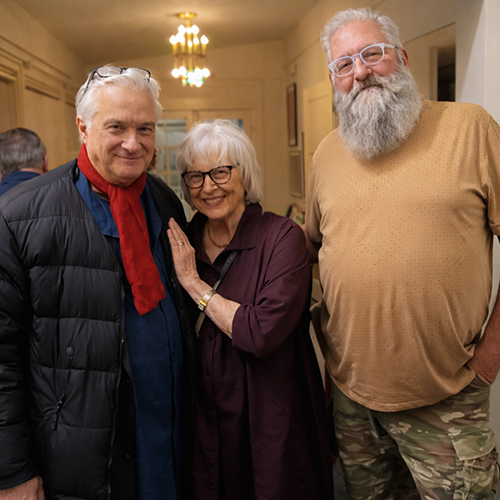
Photo © Douglas Moon
Of course, very much so! Francesco Paolo Paladino is as outgoing and gregarious as I am, Peter Fransson is quite restrained, and I’m somewhere in between, but I understand where they’re both coming from, and I truly enjoy it. But it’s not just Europe that’s different; even in the United States, there are very different cultural touchstones. I work with two Americans, and one of them is Tim Lucas, a wonderful writer who kick-started me in file sharing. Up until that point, I had written on computer, and I’d sent songs to do some things, but I had not really created my own instrumentals or written much instrumental music on computer. But he started me on that, and we did an album called “Secret Life of Love Songs” – and we’re still involved together today. He’s from the Midwest, and I’m born and bred coastal person with other attitudes, so yes, there are cultural differences even with fellow Americans.
– Do these old guys see you as an elder stateswoman? Does their respect get in the way of pure collaboration?
No, I don’t think that enters into it, although I may be blind to it. They treat me with respect in many ways, more respect than I earned in THE U.S.OF A., but I was treated with respect in Country Joe’s band too. In any creative endeavor, there is always conflict, and I think the conflicts that we resolve have not much to do with my being, what, illustrious? I don’t think I have that. I never noticed that these artists treated me any differently than one of them. In fact, I feel like I am being honored when they call me back, “Do you want to do another song?” With FIVE DAY MIRACLE TENT CRUSADE, we’re definitely equals; with Francesco, I’m not only not equal, but he is the maestro, and I am one of his battalion. It’s a wonderful fit and I get to be featured on some of his masterpieces such as “Monastir.” With Tim, we are equals, as well. He’s a prolific writer and is very well known known in his field, so I rely on his imaginative gift and he, in turn, trusts me with the craft of making his ideas singable.
So, yes, in some cases, I am more skilled, but I don’t think anybody treats me as though I’m some kind of famous person. I may have more background in lyrics than the folks I work with, but none of my collaborators are reticent about lending their opinions. Francesco, as I said, suggests that I sing some things dripping emotion. Allen Whitman, of FIVE DAY can feel free to comment on some of my phrasing and I welcome the attention. When formatting Luca Ferrari’s translated poetry, I’m always faithful to his intent. Tim Lucas and I work things over endlessly and neither one of us presumes a command position.
– How do you approach your lyrics?
I am much more about the sound of words than their tidy meaning. Assonance is more important to me than rhyme, though blank verse can be a challenge to sing sometimes and most listeners remember rhymed lines better. After things are near to complete, I check for consonant collisions as well. I try to connect the end of one word with the beginning of another. Many years of choral singing give me that bent. It’s pretty intuitive.
I write lyrics in three different or four different ways. Sometimes, there’s something I want to say, and I will draft prose first and then I will put it into form. But most of the time I’m working with my mouth and my body, trying to make my lyrics as physical as possible. I will sit or stand at the microphone with the prepared words in my hand or on my stand, and I will change and rewrite them as I sing. And often, when I get to the outro, where you’re repeating a word that is extracted from the basic context, that’s completely improvisational, and then I will go back and take what I’ve improvised and put that into the written form. People often see me muttering to myself when I think no one is watching; what I’m actually doing is sculpting a phrase, so it falls naturally, and trying all kinds of possibilities. Once in a while, if I’m lucky enough to find an evocative and repeatable line, it can border on an incantation of sorts. It feels like it comes from nowhere.
– But there’s a big difference between writing for yourself and for somebody else to sing!
I don’t think so, no. I write for myself as a singer, and the lyrics that I write for other people may or may not have thematic connections that I am unaware of. I write my words to suit that point of view, but in a way that I can be authentic when I sing.
– What if you’re writing for somebody with a wider vocal range?
I don’t have that opportunity. I’ve never been asked to do that. I have written choral music in college, and I’ve written for children’s voices a lot – I have a huge catalog of children’s music – so I don’t write in my range. In fact, when I had a summer program, I would teach the songs so I could sing the melody an octave lower than the children, whereas a lot of teachers bring the children’s voices down. You shouldn’t do that! I’m a formalist when it comes to teaching.
– It’s interesting that, while people who are much younger than yourself become conservative and focus on something they’re comfortable with, you’re open to everything new, writing about things like AI and the Webb Space Telescope. How do you retain this inquisitiveness?
It could have been my education. I went to a very fine women’s college. I don’t remember using much of the content of what I learned. but the attitude at Barnard was to be brave and to be inquisitive and audacious. That was what you learned to do – and also to be autodidactic, to be able to teach yourself a new skill. I love doing that even now! In recent years, I’ve been exploring telescopes, exploring space and exploring my inner mind. When you asked me how left-wing I was, I said I haven’t been very active, but I’m writing a song now for a brilliant guitarist named Wall Matthews – we’re just getting to know each other – and I’ve been so upset by the recent ruling in this country, which is going to deny controls of environmental hazards, that my attitude is more left-wing now than it’s ever been, because it’s the socialists and the communists who tie the greed that causes global warming to profit-making. A book came out in 2004 by a friend of the family named Ross Gelbspan [“Boiling Point”] which traced the greed that put environmental controls on the back burner, and I find myself agreeing with the socialists on this. It’s capitalism that’s doing this!
I never thought I would be saying that at this age, but certain things will make me violent and angry, and I have to express it somewhere. I’m not that ambulatory – marching is hard for me, I don’t drive at night; there’s a lot of things at eighty-five that you just can’t do – so I sit here and write, and I’m fuming mad at this. The decline in the environment is an issue that keeps me up at night, more than almost anything you’ve asked me about, and if you look at a lot of my work, there’s always something about environmental concerns.
My initial association with Peter Olaf Fransson was sparked by his concern for the planet. The piece that I did with BEAUTIFY JUNKYARDS, “Turn the Tide,” is about wishing I could cast a spell to make the ocean come alive again. I’ve an unreleased track with guitarist Gary Lucas about ice storms. Francesco Paladino asked me to collaborate with him on a song [“Keep Us Green”] about trees being cut down in Piacenza. As I mentioned, I’m currently drafting words to a track by guitarist Wall Matthews which I call “Canary In The Coal Mine” that implies that we’ve known about global warming for a long, long time. Not a hoax, as it were. I do have hope that the rule of law will be restored someday – maybe not within my lifetime, but there’s a possibility – but there is no possibility of restoring the planet once glaciers melt and once the rivers rise. There’s no going back, and that frightens me deeply.
One of the earliest environmental works I did with was with my brother in law David Miller, a retired ophthalmologist who frequently wrote about scientists. I scored his play about John Tyndall, a British scientist who built a contraption that measured the relationship between radiant heat and gases back in the 1870s. Tyndall climbed the Alpine slopes, and measured glaciers. It’s clear that climate science goes back well over a hundred years, despite current deniers. Another scientist we wrote about was Thomas Young. I would keep things light-hearted, though the subjects were serious.
– You mentioned a song that you’re going to write and songs that you’ve written recently. Did you ever think about putting out an anthology of your unreleased works?
Sure. But how do you do that in this day? I’m not bitter, but I’ve had enough of chasing after labels. A lot of my unreleased work is already on SoundCloud, if anybody’s interested in it, and I don’t want to be spending my time writing to record companies when I have so little time left. I’m sure I will live till ninety, because I’m healthy enough, but I don’t think I will have the energy to write this much in a few years, so I want to get all the songs out now. When I first worked with Francesco Paladino and Luca Ferrari, we wanted to get our stuff out, so we spent days and weeks getting a label, and that set us back; we weren’t writing music while we were doing all this bureaucratic stuff. But eventually, a label found us. I have a lot of stuff on Bandcamp, too. You know when it’s going to happen? The day after I die, somebody will come and say, “Oh, what is she got in the box?” – and they’ll publish it and there’ll be money made. But while you’re alive, nobody wants to know much.
– What about AI? What’s interesting for you in this thing?
It’s something I never would have expected to happen when I was first starting to think about music. I remember listening to the first recording that was created by machine – it came out of the Princeton Electronic studio – and there was a voice that went, (sings) “Daisy, Daisy, give me your answer, do.” I thought that was the limit, that that was as far as we could go. I had no idea that there would be algorithms and pattern recognition that would emulate the way language is formed, and I find that intriguing because it winds up as something dumb. So I’m thinking, “Oh, this is foolish. I’ll do a parody of this!” – but as soon as the parody is out, I’m realizing that there are refinements now in AI to prevent its coming out dumb, the refinements that will imbue it with a certain èlan or a certain sophisticated sense. Within a few years, we may not be able to tell the difference between something that is AI-created and something that is original. I know someone who writes wonderful poetry, and he’s able to put that poetry to an AI adjunct so that there are actual songs: it’s nice to hear it the first time, but it doesn’t grab you – you don’t want to hear it the second time because there’s no depth to it. It’s a lot of sheen, a lot of polish, and everything’s in tune, but I’d rather do something else than listen to it.
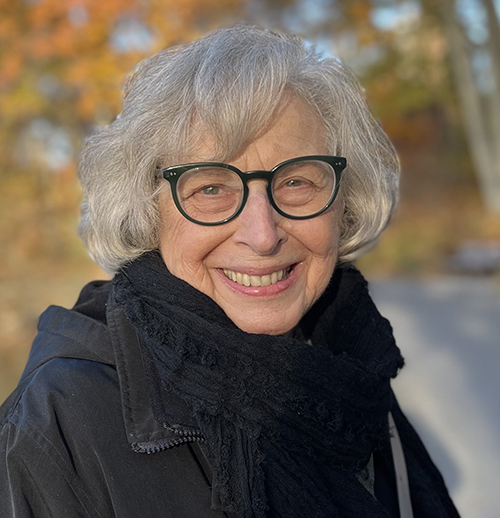
Photo © Jessica Falarski
Still, “Confession” that I did with FIVE DAY MIRACLE started as an AI piece. There was a mistaken credit line in one of their promotions. They swiftly corrected it and a few weeks later it reappeared. Damned robots! I got so upset that I said, “Okay, I’m going to ask, AI to write me a damn lyric about how I’m in love with a machine!” I did – and it came back with some pretty stupid ideas, but I used one or two of those lines from AI in the song. I play a lot with something called the VVTS – voice, viewpoint, time and setting – so when I turned the viewpoint around and made the setting different, all of a sudden the viewpoint was not me talking to a computer, but the computer talking to me. Suddenly, it took form! (Laughs.) So yeah, I do look at AI. I’m not rigid about it. There’s even some AI manipulation of old photos in the promos that Alan Gubby of Buried Treasure did when he released “The Afterlife” by Retep Folo and me. They can spook you out, but I love ‘em.

