


Rahul Mukeri 2026
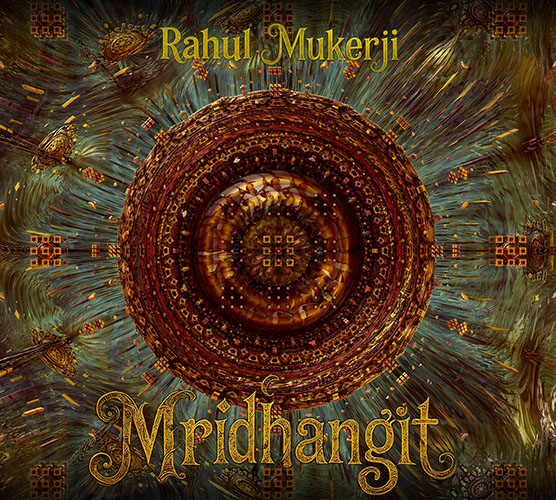
Mridhangit
Refusing to adhere to fusion frontiers, Maryland-dwelling composer ropes in kindred spirits for his second instrumental trip.
Rahul Mukerji may have reaped quite a few well-deserved accolades upon releasing "Ma De Re Sha" in 2017, but the guitarist didn’t seem to be in a hurry to follow his debut with another raga-scented album. Submitting instead a couple of highly evocative movie soundtracks, Rahul shaped a sophomore effort nine years after he struck out for the first time, yet those who expected this record to pick up where its predecessor left off will be in for a treat. What Mukerji packed into “Mridhangit” should feel less exotic than his initial offering – only the eleven pieces on display prove just as exciting as the earlier ones.
Never compromising his native Indian motifs, Rahul not only embroidered them with nuances borrowed from different cultures, and invited collaborators from all over the world to accentuate the thrills he’s sculpting – anchored throughout by PAIN OF SALVATION’s drummer Leo Margarit – but also went beyond the obvious, so there are plenty of surprises lurking here. While the opening vista that the tabla-spiced “Mr. Sinister” projects is indeed eerie, once the elastic lines of Ruben Rubio’s fretless bass paint a darkly arresting motifs over Mukerji’s acoustic strum, the majestic passages grow almost orchestral to allow his electronica-tinged six strings to launch a heavy assault on the listener’s peace of mind. Having prepared the audience for things to come, or thus it may seem, Rahul’s fingers reach for razor-sharp riffs on “Bheja Fry” before they relent and let blissful licks bring on reflexive, if still anxiety-ridden, instants of pure beauty.
However, the otherwise groovy “Twelve Ganeshas” unfolds a gossamer lace of harmonic transparency, as the beats of Praveen Sparsh’s mridangam – one of the music tools, alongside handpan and guitar, this album’s titled after – enhance the overall calmness, which “Enjoymaddi” turns into a hypnotic recital with Chaplin’s solemn piano gradually setting the scene for Mukerji’s Indo-jazz interplay around his own finely layered parts. Nothing can prepare the hearer for the titular track, though, because the rhythms Sparsh’s konnakol apply to its magical, flute-shot balladry are startlingly emotional, in a stormy manner, rendering the ensuing sonic panorama as irresistible as the effervescently electrifying “Kalli Penn” is. That’s the mood “Funky Pakora” further augments with a mirror-ball sort of joy, and the violin-stricken “Dushtan” first switches to metallic apocalypse and then to jungle fever which the ever-shifting “Rahu Ketu” heats up through exciting throbbing and tasty shredding over and behind the composition’s breathtaking melodies.
“Four Seas” can try and lower the degree of this thrill, yet it gloriously fails to diminish the spiritual uplift that’s there for all to feel after the ivories fade to background and fretboards float to the fore. They’ll swell until “Mutabor” reveals a duduk-staged elegy which Mukerji’s haunting tune and delivery lead outside of what’s considered sensual. What Rahul created on “Mridhangit” is simply astonishing.
*****

