


Pangaea 2025
Out of forgotten lore and into the fire: heavy proggers dust off long-abandoned project and make it burn twice as bright.
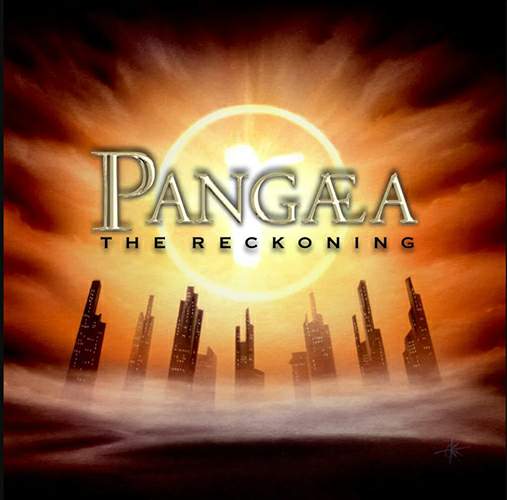
The Reckoning
Sophomore albums are often difficult, yet it was a fourth longplay that acquired such status in this ensemble’s history. The “Houston, we have a problem” catchphrase didn’t really describe what happened with “The Reckoning” which the Texans recorded more than once without releasing the results. Produced by Robert Berry, who’d done a remarkable job on the band’s first three platters, from 1996’s "The Rite Of Passage" onwards, and co-wrote a few cuts for their follow-up, the dozen songs became obsolete almost immediately, though, because vocalist Steven Osborn left the fold soon after laying down his parts. Fortunately, guitarist Darrell Masingale, the lead warbler on the previous platters, used to share vocal duties with him when the new numbers were performed onstage. So when manager Dito Godwin offered to move the group to Hollywood to add brass to the fresh material, the updated arrangements required another bout of sessions where everything got done from scratch.
The sonic expansion entailed the docking off the bass-propelled quasi-ballad “Wall Of Stone” and “Sun God” that brings funky anxiousness to the fore in a similar, vulnerably raw manner, but the tightening of content focused the rest of the pieces which retained their running order in both 2003 and 2004 variants presented now in a two-disc package, while unplugged takes on half of them from 2005 provide further insights into the collective’s brilliance. The musicians shine on opener “Hold On” that bared its prog spectrum under Berry’s eye and was fleshed out with soulful slabs of horns and shimmering six-string solos in Godwin’s view, and if the original approach to “So Long (So Far Away)” has a resonant indie frill to it, the track’s subsequent reading shows a catchier contrast between electric and acoustic instruments. However, Corey Schenck’s keyboards and his brother Andi’s drums render “Cigarette” most intimate in this serenade’s initial appearance, yet give a stronger push to “C’est La Vie (Why?)” in its Southern-rock reimagining, with the song’s flamenco lace augmenting one as well as the other.
The same can be said about “All I Want” which demonstrated orchestral potential from the start bit obtained a retro-mariachi feel along the way, whereas “Tomorrow’s Gone” somewhat lost its momentum in development, gaining instead an impressive sway, and the groovy “San Jose (Free)” grew in a hard-hitting stature from year to year. So when the bluesy “Happy Ending” speaks of sacrifices, there’s a lot to “The Reckoning” to bring this truth home and restore the link between "Beowulf" and the band’s first chapter. A double-edged delight.
****

