


Vertigo 1982 / 3VƐ 2026
Lucerne ensemble enter the ’80s and embrace the new era’s audio values and find fresh fads audacious.
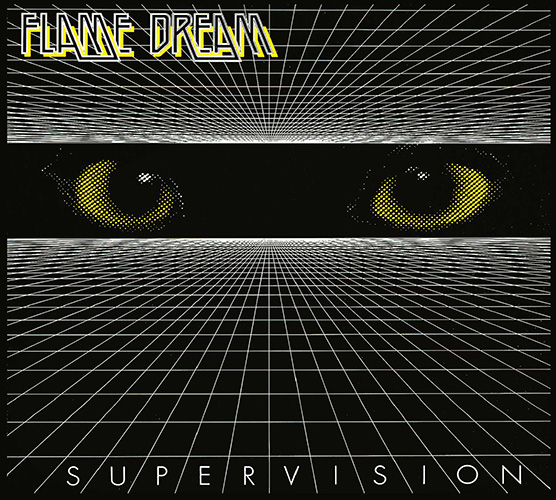
Supervision
It wasn’t an immediate change, yet neither there was a watershed. While this band’s second record, "Elements" from 1979, felt frozen in time, carrying art-rock momentum from the genre’s halcyon days to the great unknown, when similar outfits’ epic panoramas seemed to be crumbling around them, 1981’s "Out In The Dark" found the Swiss collective’s perspective eroding too, spectacularly so, with a different musical landscape emerging. What they implemented on “Supervision” a year later appeared only logical, then, as the pop figures the quartet introduced to their arrangements added to, rather that subtracted from, the group’s creative fearlessness and sounded just as interesting as the familiar stylistic passages. Even the cover artwork, which may look cheap today, albeit not without a tinge of nostalgia, evoked the intrepid spirit of early computer games whose 8-bit wonders landed here alongside richer instrumental textures.
The ensemble didn’t consign ambition to the past, as the tripartite epilogue “Paradise Lost” suggests by taking John Milton’s concept into futuristic space; they, however, transformed the objectives of yore into reality-grasping voyage to the next decade’s possibilities, and not for nothing one of the numbers on offer here is “Time For A Change”: an electronica-tinctured romp through oft-trodden, but still surprising, prog terrain. Still, it’s “Blackmail” that starts the album off with a bold statement in the shape of Roland Ruckstuhl’s throbbing sequencer which Urs Hochuli’s bass and Pit Furrer’s drums underpin in a very motorik, if rather emotional, fashion, betraying the influence, in equal measure, of GENESIS and KRAFTWERK’s on FLAME DREAM’s infectious formula, as Peter Wolf’s vocals arrive immersed in this heady sonic mélange, where vocoder phrases naturally belong as well. The more unexpected in such circumstances are the acoustic guitars and bucolic flute of “Dancing Into Daylight” that requires no words to follow the opening salvo with brisk fluidity before the piano-splashed titular song offers a dramatic riff and bare beat only to turn funky, emphasizing the platter’s sci-fi slant, and land on an orchestral chord.
It’s a fertile ground for the magical balladry and magnificent vista of “Signs Of Solitude” to bloom on and for the baroque-colored “Tragedy” to direct the flow towards heart-rending, sorrowfully wondrous serenading which will grow in dynamic scope and prepare the listener for further raptures, including the finely polished waltz “Woman’s Art?” and the aforementioned denouement. Yet “Paradise Lost” sees the initial intent falter, because after “Arrival” sets the scene for adventures to unfold, “The Attack” goes through the motions instead of tightening the performances – until “Finale” sculpts an uplifting hymn out of cosmic void. Experimental and exhilarating, “Supervision” is a document of a poor period – the document that made those days better than they were.
****

