


Think Like A Key 2025
New Jerseyan new-wavers neutralize injustices of the past by bringing unforgotten creative baggage into here and now.
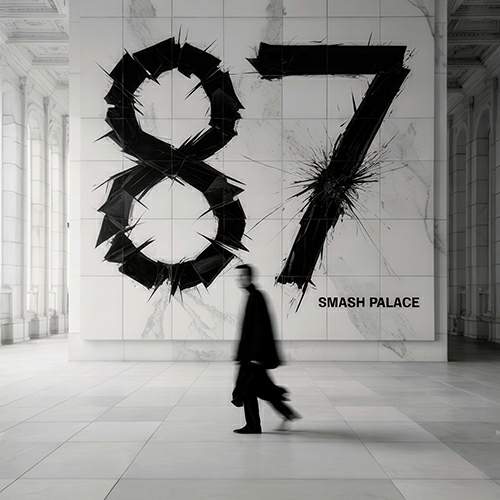
87
There is such a thing as a difficult second album – but there are also second albums which don’t happen, and not for the lack of trying. That’s what happened to this ensemble’s sophomore effort, a follow-up to their eponymous 1985 debut, when, lured to leave one label for another, the band were left without a contract at all, and the deal proved to be elusive despite the “Living On The Borderline” single airing on MTV. By the time of the disaster, the youngsters had been working on new material, and the Philadelphia radio listener could catch at least four of their fresh cuts yet, with no outlet for those tunes, the collective broke up – to return in 1999. They’ve remained active ever since and issued about ten subsequent platters without conjuring up the songs languishing on the shelf for almost four decades, apart from “I’ll Be There” surfacing on “Over The Top” in 2004, before the group’s original line-up got together again and set out for a voyage back in time.
Restoring five old demos and partially re-recording five more – although a few numbers seem to have fallen through the cracks – allowed the veterans to show that their brand of new wave is still rather potent, unlike a similar strain of power pop many artists from the ’80s failed to carry forward. More so, the shift between archival tapes and the results of the sextet’s recent foray into the studio – there’s no interlacing between the two sessions: the fully fleshed-out later tracks precede earlier sketches – is almost indistinguishable, and the conceptual, if not sonic, consistency on display is stunning. Sure, “Along For The Ride” demonstrates slightly dated ivories and overall soundscape in which Brian Butler vocals flutter, supported by his brother Stephen’s adventurously funky guitar and voice, but tentative rawness doesn’t ruin the arresting momentum, while “Bitter Blue” opens this album with the same impetus yet introduces wider spectrum of frequencies, as Phil Rizzo’s bass notes anchor the piece’s streamlined intensity. And while the aforementioned “I’ll Be There” rocks wilder than ever before, its riffs bulging quite impressively, “Stranger Than Strange” has jangly, ’60s-influenced innocence in its resonant licks and lyrical blast from the past, and “Imaginary Lines” challenges the passage of time first through scintillatingly psychedelic melancholy and then anthemic unfolding of romantic rumble that Harry Lewis’s drums drive to delirium.
It’s easy to juxtapose the ideas and aural vistas of “Everything Under The Sun” and “First Time For Everything” – both rooted in Ecclesiastes, only the acoustically tinctured former pushes its irresistible envelope towards blissful twang which has been upgraded to feel contemporary, and the piano-splattered latter roars with retro vigor. However, the insistently rolling “Poor Man’s Paradise” won’t betray the period the musicians lay this shuffle down in, whereas the moves of “Top Of The World” will reveal maturity the players couldn’t grasp all those years ago, and joie de vivre of “Centipede” wouldn’t stay intact to linger on until today. Today, retrieved from a temporal capsule, the difficult second album’s songs don’t elicit chagrin or nostalgia; instead, they evoke a knowing nod and a warm smile, confirming “87” was worth the wait.
****4/5

