


Think Like A Key 2026
Plucked from obscurity and brought alive, an utterly entertaining history lesson from young mavens of theatrical rock.
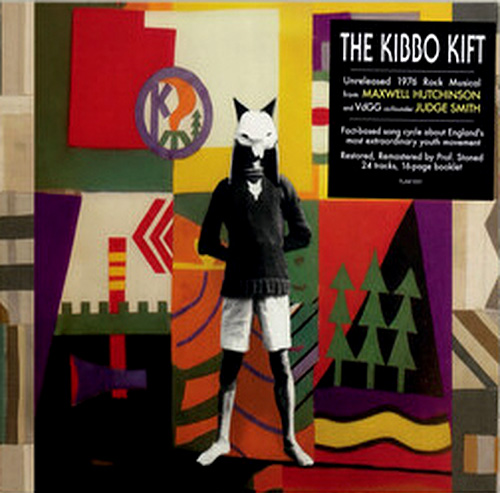
& JUDGE SMITH –
The Kibbo Kift
There are many manners in which Judge Smith‘s conceptualism has been manifested over the last six decades, but if one were pressed to detect a pattern in his creative curve, it wouldn’t seem too difficult to see how the polymath’s regular albums such as "Mr. Mckilowatts Dances" tend to emerge from various recesses of his imagination, whereas songstories – as the artist calls them – like “Curly’s Airships” often come from real-life events. He couldn’t get more real with the tale of The Kibbo Kift, a British pacifist movement that existed between 1920 and 1935, the period Judge and his multi-instrumentalist friend Maxwell Hutchinson always found fascinating. The two worked together in HEEBALOB, an ensemble Smith established soon after leaving VAN DER GRAAF GENERATOR, yet the first official fruit of their collaboration was this 1976 musical – penned for a possible album, endorsed by the peacenik group’s leader John Hargrave and later taken to the stage. And, it turned out, to the studio as well, with the show’s live band called TOTEM.
Those who tried to guess how the lyrics reproduced in the librettist’s anthology book sounded when set to tunes have their answer now. The cast members were unavailable for the recording, though, so all the vocals had to be provided by the wordsmith himself, pianist Robert Pettigrew – his future partner on "The Trick Of The Lock" and a few other opuses – and Christina Matthews, and whatever cracks there were for some parts of the tentative rock opera to fall through are filled in on this glorious reissue with Judge and Maxwell’s demos used to teach the actors their roles. Detached from the spectacle, the results may feel funny, but the lyrics and melodies gel quite perfectly and get lodged in the audience’s memory almost immediately, and even if the listener’s not inclined to investigate the album’s background – which is recommended for better understanding of the proceedings – most of the two dozen tracks on display, including the guitar-driven, belligerent overture and the anthemic finale taped at the 1977 production of the piece, exude a lot of charm.
It’s impossible not to admire the ways that “Father Dear Father” turns political agenda into a serenade via shifting rhymes and pop arrangement, “The Children’s Song” derives deep meaning from the players’ vaudevillian approach, or the funky “Tunbridge Wells” reaches for the middle-of-the-road allure. While the histrionic “An Empty Clearing” or “We’re The Green Shirts” lend themselves to purely aural experience a little less readily, albeit with the same gusto, the genre-jumbling “Social Credit” fares much better here, and while “The Leader Song” waltzes with a lot of impassioned poise, “To Live In Civilization” elegantly marries the peculiar, particular subject matter to the universal, soulful delivery. Several tracks serve as links which connect longer numbers, yet recurrent themes – and acoustic riffs flowing from “The Heckling Song” into “No Bloody Fear” – hold everything within a single sentimental context.
An engrossing presentation that grows on history aficionados and theater buffs alike, and on the uninitiated who love buffonade, “The Kibbo Kift” is precious on many counts.
*****


