


May 2026
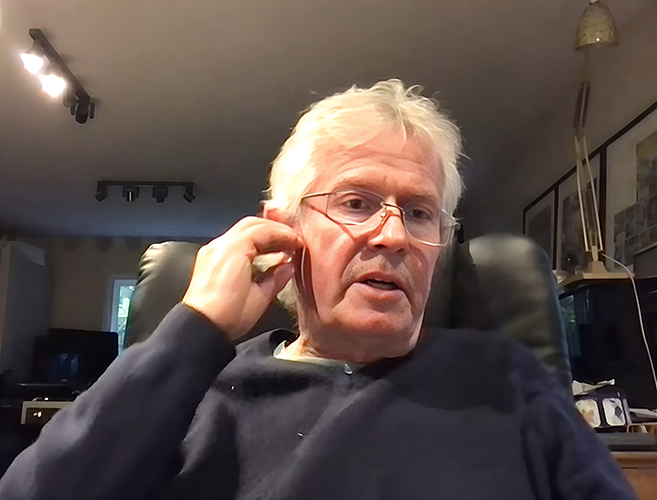
You cannot speak to Tony Banks and avoid talking about GENESIS: even if you don’t bring up the subject of the famed keyboardist’s former band, he will. Indeed, for many a listener, the British musician’s name is forever linked to the ensemble that might not officially break up but effectively ceased to exist – yet focusing on it means ignoring the veteran’s solo oeuvre and his work with such projects as BANKSTATEMENT and STRICTLY INC.
Some of Tony’s work outside of the legendary group’s confines is similar to what he used to do within the collective; some of what Banks issued on his own records is significantly different and, thus, as alluring as any cultural artifacts worthy of exploration should be. More so, the composer’s albums, for all their diversity, are rich of melody and often intellectually rewarding too – and it was this, frequently ignored stratum of Tony Banks’s catalogue that we set to delve into.
– Tony, let’s start with a line from a song of yours. “I like the work and I do it well, and that’s enough for me”: how do you relate to it at this point of your career
That line came from a character who didn’t know quite what he’d been through, but he knew he’d been through something, and so his response was just to accept it. It was supposed to be a little story, rather than anything autobiographical. Originally, I had based my album “A Curious Feeling” on a book called “Flowers for Algernon” – and then I ended up not using it because there was a similar piece coming out in England at the time. But I switched the story around a bit and created a different way to describe the character losing his mind, so it’s not really supposed to relate to me.
– You based quite a few songs on various books. So how important is it for you to have a proper literary source for a musical work?
Well, not very. You just take ideas from where they come. When I’m writing lyrics, I think of an idea and try and work it around, but normally the lyrics are written after the music, so I sort of try and make it fit. You use any source you can, and sometimes, when you’re stuck for an idea, you read a few books and see what happens. Something comes to you. I think “A Curious Feeling” was the only album where I had a real book idea to work from, although there had been bits and pieces of it with GENESIS. I used the poem “The Waste Land” by T.S. Eliot as a starting point for “The Cinema Show” – and the other ideas were just made up, inspired by what he’d written – but I don’t think anything else really was particularly written based on books.
– And how important were your studies at Charterhouse School, a proper classical education, in making things interesting?
I don’t know. It’s just what I do. Obviously, I learned a lot about classical stuff and everything, so I use that in my lyrics. Some people feel that it gets a bit too much of that sometimes, but I like to use language, and it’s what comes out of me naturally. I don’t want to just write songs that are all about love or dancing, or whatever, so I’m looking for ideas, and sometimes, with the nature of the pieces I write, some of them are quite long and go through lots of changes. A story of some kind or something to hang it on seems to work best for me.
– You always looked like an unassuming artist, who worked only for the music, rather than anything else, but at the same time you were quite competitive, in creative terms, with regard to other band members, but not other keyboard players.
I don’t feel competitive with anyone, but in the early days we were doing one album a year and there were five of us – well, at least three or four of us – trying to write music, and you could only get a certain amount [of material] in there, so I tended to shout quite a bit. I got a bit calmer later on, but on “Foxtrot” or “Selling England” my voice was the loudest, and therefore, there was a lot of stuff I wrote on those records. That’s why Peter and then Steve [Hackett] left: people were trying to do too much within the group – there was too many of us all writing, and there wasn’t really room for all of us to do that – and once we got down to the three-piece, it was easier. Then we got to the stage, right at the end, on the last few albums, where we tried to go into the studio with nothing prepared at all and see what would happen with just the three of us playing, whereas on some of earlier records we went in with finished pieces and then arranged it with the group.
It’s the writing I’m interested in more than anything else. I can’t play as well as Rick Wakeman can – he’s a fantastic keyboard player, he’s got great technique, which I don’t have – and when I play on records, I go as far as I can with what I do, I often write things that I find a little bit difficult to play, actually, but I don’t care too much. I’m not trying to show what a great technical man I am: when I play fast or anything, it’s because I feel the piece requires it. As I’ve said many times, people claim that the so-called solos I do are really instrumental passages – yes, they’re normally fairly carefully written, just as carefully written as vocal passages, it’s just that they’ve got an instrument leading them rather than a voice – buy that’s the way I tend to do it. I don’t like to improvise on stage, but obviously, when I’m writing the pieces, I improvise to get what I try, to hone it down to a particular result, and that’s what you end up with on the records.
– Your focus on songwriting rather than playing basically warranted the longevity of your solo work. None of it sounds really dated, unlike some works by other keyboard players.
It’s kind of you to say it, but I can’t judge my music beyond that. I just write. I sit down and I write trying to please myself – that’s primarily what I do – and if I find something I like, I will try and remember it, and play it, and then work with it and try to get other ideas that go with it. It’s all down to musical composition. I’m not very influenced by particular fashions or what other people are doing – I don’t listen that much to other people’s music. These days, I listen more to classical music and a few of the old friends, old stuff from the Sixties and Seventies that I used to like, but I look at charts now and I don’t know the name of anybody, and even if I know their name because I’ve read it in the paper, I don’t really know any music by them, or very little. I listen to radio sometimes and I hear the odd thing that excites me, but what you might call straight-ahead pop music has gone away from what I used to like, which was more expansive in terms of chords and everything. THE BEATLES, THE BEACH BOYS, Simon and Garfunkel and all that used to be quite inventive, whereas nowadays an awful lot of music you hear just uses standard chord sequences, and that doesn’t really interest me very much.
– Many people didn’t like it when prog bands like GENESIS or YES moved into pop in the early Eighties, but I always thought that development meant the progress didn’t stop, and that it was a natural continuation of what you’d been doing until this point. What would you say about this?
For us, it was very natural. We did “Duke” – one of my favorite albums! – but we felt that we were doing the same kind of things: taking pieces, then making reprises of them at the end of the record… So on “Abacab” we wanted to try and go back to making the songs more concise and approaching it slightly differently – it was a conscious decision to do that. We all had solo albums out by then, where we used our ideas, so we decided to write as much as we could in the studio, and I think that writing together probably simplified things a little bit. The normal way of writing was: Mike would blues along a bit on a guitar, and might get a riff or something going, and I would try and play against it – the chords were sometimes slightly more restricted, but I’d often play a weird one, and he’d change with me. That worked quite well. but when the method of writing changed to some extent, we got more confident with being simpler. It’s strange, really. In a way, we used to hide behind the complexity, because I find it much easier to write a twenty-five-minute piece than I do to write a three-minute pop song. For me, that’s the way it is, but we started to get quite good at little things like “Follow You Follow Me” which we thought sounded really nice. We did it and thought, “Let’s leave it at that. Let’s not do anything else with it. Let’s just keep it simple!” – and that showed us a new direction to go. Also, you can’t be but affected a bit by what’s going on everywhere else, and there was more of an appetite for slightly more direct pieces.
However, we did the more involved things as well, later on, things like “Domino” which goes through a lot of changes, as does “Home By The Sea; and then you’ve got songs, even pieces like “Fading Lights” which has a very extended middle section. We liked to do all that, so we never felt there was a big change, apart from the personnel changes. When people left, there was a slight change in balance between the musicians, but on those last two or three albums all of us were doing the same amount of writing, whereas on “A Trick Of The Tail” and “Wind & Wuthering” it was definitely much more Mike and I. Still, if we use the word “progressive” as it actually is, we changed in terms of progress – we progressed in that way. Obviously, progressive music meant something where you were trying to push the limits of what pop music could do; that was the idea, I suppose, because we didn’t think of it like that – we just sat down and wrote what we felt like. We were quite as happy with a song like “I Know What I Like” back in our big progressive days as we were with “Supper’s Ready”: I mean it’s just what we came up with at the time. And if you remember the very first album we did, “From Genesis To Revelation” was a series of pop songs, a series of attempts to have a hit, none of which really worked. As a writer, I wanted to try and evolve, so yes, it’s been a long career, and we just adapted. We’ve been going longer than fifty years, and you’re going to go through a lot of changes in that period.
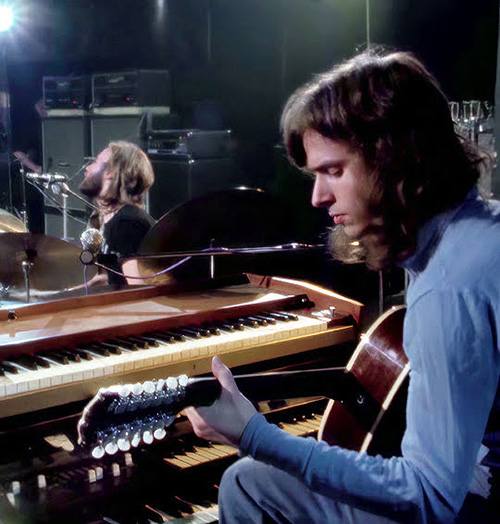
I like it when people don’t really think what era a particular song came from. I’m a big fan of Graham Greene: you could talk about “Brighton Rock” or “The Human Factor” as sort of beginning of the end of his career, but I don’t think of them as first and last of his books or anything like that – his whole body of work is worth reading. And I see it like that – “Fading Lights” and “Supper’s Ready” are all as relevant to me – so when we did the stage show, we tried to incorporate things from all eras in it. And we used to do a sort of big medley of stuff from early days, “In The Cage” and all that, and then followed up with “Hold On My Heart” which I think is a lovely song. It’s just nice to have the contrast as well.
– How does your modesty correlate with playing stadiums?
I quite enjoyed doing it, when the group got to the stage where we had a big audience and a lot of people wanted to see us. I don’t really do much up – I play the stuff, that’s it. I write the stuff and I play the stuff, but I’m very dependent on the man out front, and both Peter and Phil were just great communicators with an audience. As a band, we played very well together and could fill these places. I listen back to some of these old concerts we did, and I’m quite surprised: when you’re playing it you think you’re just struggling sometimes, but then you listen back to it and you think, “Well, actually that sounds really good!” Stadiums aren’t really the best medium for us – we probably sounded best in a theater or a small arena – but we ended up playing where we could have the most people, and it was sort of celebration rather than just a concert.
– Did you feel comfortable, then, by doing the funny walk for “I Can Dance”?
You know, the videos are quite fun. I’m no actor, as is very apparent, but Phil was good in front of the camera, and Mike [Rutherford] and I were able to have a bit of fun: we’d put on a raincoat and a hat, and we had a persona. The “I Can Dance” thing had been around the group for a while – that particular walk is something that Phil used to do. He said that when he was at acting school he could always tell the people who had no rhythm, because they walked with the arms the wrong way around, so we adapted it for that particular video. But we could act it out, and hopefully do it in a humorous way, if we had a definite story, like “Jesus He Knows Me” or “Illegal Alien” – it seemed to work for us. I liked “I Can Dance” and I particularly liked the “Keep It Dark” video, just because I thought it represented the lyric very well.
– Video is one thing, but walking silly on the Wembley or Knebworth stage must have felt differently.
It’s not regular. You get quite nervous when you go on stage, you get a great buzz. Big audience makes a lot of noise, it carries you through the first couple of songs, but then there’s a few technical moments you’ve got to worry about, and a lot of the time I’m concentrating on that. You want to get it right. You’ve just got to get it right. But I find it quite exciting. You write a thing at home, on a piano, and then you find yourself playing it in front of fifty thousand people! When we started this group originally, I thought we could get an audience, but I never expected to get big audiences like that.
– Was it difficult for you to go solo after working with the band for so many years?
Yes, When I did the first solo album, I was trying to plug the gaps that I had and I wanted to try and do as much as I could, so I played all the guitars on “A Curious Feeling” and bass as well as the keyboards. It was quite nice to do, because I’ve always played guitar and I’ve played a lot of acoustic guitars on a lot of GENESIS music in the early days. I knew I didn’t really want to sing at that stage, so I found a singer, and I had Chester Thompson on drums, because GENESIS had been playing live with him, and I really liked him and really admired his playing, and I went in the studio with the producer that we’d used on the previous GENESIS albums, Dave Hentschel: all that made it easier to do the album, because I didn’t know how it was going to work out. I kept it as safe as I could, in a way, doing as much as I could myself and having only people that I really trusted around me, and I was happy with the result – I’m very proud of that album. And I get a bit more confident after that, but I realized that it was probably better for me to have a proper guitarist on there, certainly for lead stuff, so Daryl [Stuermer] came on board for [1983’s "The Fugitive"], and I was trying out different drummers and so on, just, seeing what I could do.
But of course, I did try singing the whole thing myself, which was quite informative. There were two or three reasons I wanted to do it. One reason was people getting confused by “A Curious Feeling” and assuming I was singing on it, which was kind of weird. So I thought, “Well, I’ll give it a go!” I also thought it’d be quite fun to try and sing some of these melodies that I’d put Peter and Phil through over the years, and I realized that I had to simplify it all a little bit, because I don’t have a great voice. You do what you can with it. There’s one site which decided that, because of my voice, this is the worst of all GENESIS members’ solo albums, but I like it and other people quite like it.
It’s difficult for me because I’m inside these things – I don’t have an objective viewpoint at all. When I originally finished that album, I thought, “This is really good!” – and then it came out and didn’t get much response. Over the years, I’ve had more hopes for all my solo albums – I mean, in a commercial sense, because I’m very happy with them in a musical sense – but sometimes you do need a bit of encouragement from the audience. Meanwhile, GENESIS was doing fantastic stuff, so that side of me was being taken care of, but what is strange is that I didn’t keep any songs particularly for GENESIS or for solo albums, and songs that have got better known within GENESIS, like “Afterglow” or “One For The Vine,” could just as easily be on a solo album, and the songs that were on the solo albums could just as easily be on a GENESIS record. What I was lacking on the solo albums would have been Phil’s voice, which was a very powerful ingredient, and Mike’s contributions, and the band in general playing – that’s the main difference. In terms of composition, there was no real difference, and so it’s slightly strange to me because, even when I listen to these albums and I know they didn’t do very well, all their songs have a bit of stigma about them, which the ones on the GENESIS albums don’t. It’s not really logical, but you do get affected by how things go.
– Well, I like “The Fugitive” and I could really imagine a song like “You” from “A Curious Feeling” being on a GENESIS record.
It definitely could have been a GENESIS song! It would have been a good GENESIS song, certainly the instrumental part could have – it would have taken off slightly more with Phil and Mike there, and we would have probably extended it a bit more and made it slightly different, but I think it’s good. But then, things like “Somebody Else’s Dream” would have sounded good with the others, too. There are a lot of songs on all these albums that would have certainly worked within the GENESIS idea.
– A lot of people don’t realize that you play not only keyboards. How does being a multi-instrumentalist enrich your approach to composition?
I used to really like writing on guitar because I didn’t quite know what I was doing half the time, and when I wrote what became the first part of “Supper’s Ready” – the “Lovers’ Leap” section – it was just a way of playing the chord, which sounded weird. What I liked about the guitar was that you could move one finger at a time, so you’d go down a semitone on each string and you’d get these chord sequences coming up that weren’t totally obvious if you were playing on a piano because you know what you’re doing there. And what was quite nice about, say, that early part of “Supper’s Ready” was that I’d go down one way, one time with the notes, and then the second time I’d go down a different way and end up in a different key, which I think works really well. And the other thing I like about it, sometimes very simple things sound good. This is another bit in “Supper’s Ready”: what ended up being the final part – that is also in the middle as “Sanctuary Man” – “As Sure As Eggs Is Eggs” which is more like I originally wrote it, just strumming on a guitar with the open strings and just playing the natural chords. A chords, G’s and then B minors and things like that sound wonderful when you strum them, whereas when you play them on a piano, they don’t sound very exciting – they’re just chords, you know. So that did really affect the way I wrote sometimes. I did a few other things over the years like that but those were the two best bits I wrote on guitar for GENESIS. You mentioned “You” from “A Curious Feeling” – that song and “Lucky Me” were both songs written on guitar, but in later years I didn’t really do so much of that, partly because keyboards could produce every sound, so sometimes when I wanted to play a guitar, I’d play it on a keyboard because it was easier, and I could play it better. But in terms of writing, I think I missed it.
– On “A Curious Feeling” you played bass yourself, but I was always fascinated with your choice of rhythm section because you had Mo Foster and Pino Palladino, John Robinson and Vinnie Colaiuta. Why is it so important for you to have the best of them?
You ask people and see what you get. I’ve had a few people – particularly, singers – say “No!” over the years, but mostly these people are very happy to play different kinds of music, so you get them onto records, and they could be really good. I played bass on “A Curious Feeling” but I found it quite a struggle to stop all the strings vibrating at the same time, so I got Mo in for the next album, and that was good because he made it sound very solid. The reason I got Vinnie in originally was because Nick Kershaw had done an album called “The Works” with him on the drums. I loved a couple of songs on it that were great, and I liked what Vinnie did with slightly stranger rhythms and stuff – he just seemed to make them sound very natural and good: that’s why I used him. As for Pino, we’d been on tour with Paul Young where he played bass and I really loved the way he did it. I quite like moving on from one person to another: not that I haven’t enjoyed the people I’ve worked with, but sometimes you just want to try somebody new and see if it gives you something different.
Sometimes when you’re working with a producer or engineer, they may have an idea of someone they think is good, and you might go that way as well, which I did with some people. It was like that on “The Fugitive” when [producer] Steve Short asked me, “What drummer in the world would you most like to have?” – because we’d had trouble with the first drummer we’d had, who didn’t prove very good. So I said, “Well, I’d like Steve Gadd…” He said, “Okay, I’ll ring him up!” – and Steve Gadd happened to be coming over for England to do some work with Ringo. He dropped him for a couple of days and did a couple of songs, which was a great thrill for me; I didn’t really use him to his full abilities, but it was really nice to have him on the album! I played with some great drummers over the years: Steve Gadd and Phil, Chester and Bill Bruford – it’s a “Who’s Who” of drummers.
– Among your solo albums, there are two projects, BANKSTATEMENT and STRICTLY INC. How much of a band situation was each of those? Or you just wanted to see how people would react to something without seeing your name on it right away?
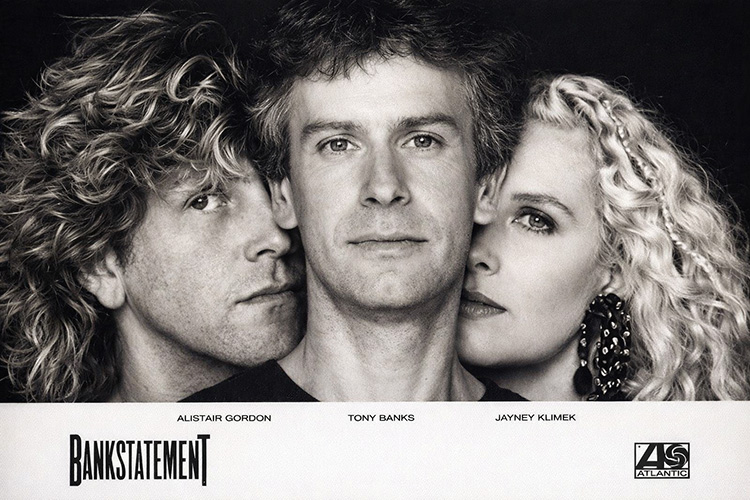
BANKSTATEMENT was definitely a band. Mike had done MIKE + THE MECHANICS, and it seemed to make a lot of difference to the way he was received, so I thought, “Why don’t I try that?” The first MIKE + THE MECHANICS album was still very much like his previous albums, but Mike came up with a group name, and that seemed to work for him. So I tried that with BANKSTATEMENT – and it didn’t work quite so well for me. The people I used on that album were great, and it was great fun working with a girl singer, Jayney Klimek – it was something I really liked doing, and if it had done well, who knows, maybe I would have gone further with that. But as it was, the album wasn’t very successful, so I thought, “Well, I won’t go that direction again!” When I finished that record, I thought I might never do another solo album anyhow, but I went back to doing it how I’d done it before, and on the next one [1991’s “Still”] I used a multitude of singers, which was also fun to do – only it was under my name.
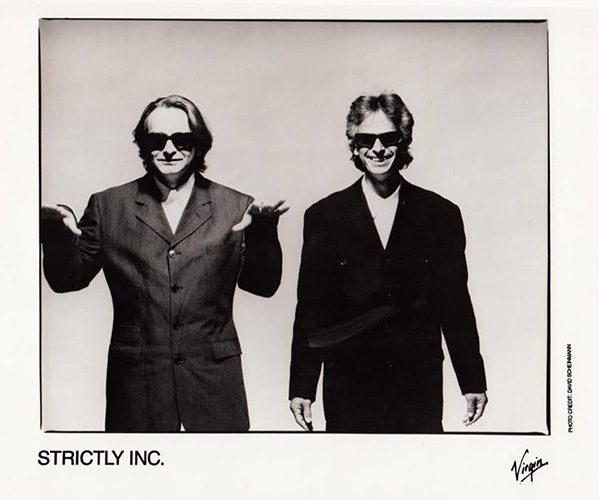
STRICTLY INC. was slightly different. I heard some stuff by Jack Hues, and I’d met him once or twice, and I really liked his style – he’s a good performer – so I wanted to try and project it a little bit like a duo. But again, the thing didn’t do particularly well, so in later years, it’s kind of been pushed out more as a Tony Banks solo album… which is sort of what it was, I suppose. I mean, I did write most of the stuff, and Jack contributed lyrics on two or three songs, and I would like that to have continued too, because there was a lot of good stuff on there, and Jack and I got on very well.
– What’s easier for you: to be writing with other people or on your own?
I like both, really. The thing about writing with other people is that if you’re stuck for ideas, someone else might set up something that is really good, and it might spark a whole session, so you go into the studio and fiddle about, and some days not much happens and other days a lot happens. About everything on those last two GENESIS albums, “Invisible Touch” and “We Can’t Dance” (Tony apparently ignores “Calling All Stations”. – DME), came out of improvisations, and if you listen back to it now, maybe you can see how that happened on “Fading Lights” and other longer songs, but even things like “Land Of Confusion” and “Invisible Touch” came in the same way. You can make a very concise song in that way, and in fact, “Land Of Confusion” is quite an interesting example, because it was originally a much longer piece, and then we decided to keep it getting smaller, and it ended up being one of our best pop songs.
– Since you circled back to GENESIS now, may I ask why did you split songwriting credits on two last albums with Steve and then got back to crediting everyone in the band?
There are two stages to this. In the early days, we credited everything to everybody because we felt it was easiest to do that, but it was not really quite like that, Certain songs were very much written by one person or another: as you know, “Firth Of Fifth” was very much my song, and things like “Willow Farm” [part of “Supper’s Ready”] was very much Peter’s. And because he was the singer, everyone seemed to think he did everything, which wasn’t the case, and we felt that we got slightly overlooked, so on the next album or two we decided to credit each song to the main writer. That was quite nice to let people know what you wrote and what you didn’t write. We kept that going for a bit, but then the reason why the things were credited to the whole group again was because all those songs were written by the whole group, by the three of us. Some of the group songs on “Duke” were slightly different: in the case of, say, “Turn It On Again” Mike had this riff, which we used as a sort of bait, and I had other bits and pieces of secondary riffs and everything, so we stuck the two together and made a song out of it, but it wasn’t until Phil played the drums on it that it came together and suddenly worked really well. Still, some of the other group songs – like the “Duke’s Travels” and “Duchess” – very much emerged in the studio.
– When did you start realizing, if you ever did, that the solos you composed for “Firth Of Fifth” began to have a life of their own?
At the time I had written this melody with just flute and piano, and I hadn’t really worked out how it was going to work in the song because, originally, I hadn’t seen all those bits in the same song. It was Steve’s idea. He said, “Look, just try it with full drums, Mellotron and everything else going, and see what happens” – and he played the flute melody, which sounded wonderful. I hadn’t seen it as a guitar melody at all! It just never occurred to me. So we incorporated it in the piece, and gave him a little more freedom, a little bit of improvising to start it off, and then, coming back with the main theme like that, it felt incredibly strong. I thought it was too classical, but guitar is, if you like, the successor of the violin, and you could imagine a violin playing that melody quite happily, so the idea of a guitar playing it was actually very logical. Steve plays it beautifully! His solo made something really great – it made the song, gave the song a real lift, and it’s one of my favorite moments from the early period.
– Would it be correct to say that it was only when you went solo that your sense of humor was revealed for the audience?
Some people saw us as very serious and very intense – and we were very serious and very intense a lot of the time, but we had these other moments. We liked to be light – for instance, “I Know What I Like” got a humorous edge to it. We used to like to have some sort of humor in the group, more in the early days, with Peter. “Harold The Barrel” was very much his song, and it was like a joke thing. I wanted to try and incorporate some of that lightness too, so when Peter left, I wrote the lyric to “Robbery, Assault And Battery” and “All In A Mouse’s Night” that were supposed to be a fair bit of a laugh, and so that was quite important. But it’s always been part of the group.
– It’s interesting that, even when we talk about your solo career, you still bring up the band!
For me, it’s all one thing in some ways. I’ve written for GENESIS, for myself and for other things: that’s been the career really and that’s the continuous feature of it, which is probably why I do that.
– Then why did you decide to go solo in the first place?
It’s always been in the back of my mind. We’d all thought we’d like to do it. Steve had done it with "Voyage Of The Acolyte" after Peter left, but I decided not to do it at that point, because we needed to pool as much resources as we could in order to plug the gap. So I didn’t do a solo album then: I know I could have done one, but I didn’t. Later on, it came up when Phil was trying to sort out his first marriage: he wanted to go to Canada for a bit, so both Mike and I decided it would be a good moment to do the solo albums that we talked about doing. It always seemed a natural thing to do as a writer; it was just a question of working out how I would do it, who I would use as musicians, and all the rest of it.
– But it was a conscious decision not to sing yourself on that album?
I never thought of myself as a singer. And it’s not just singing: if you’re the singer, you’re also the focal point of the operation. So I thought, I’d like to try and find someone with a nice voice who could do that, and I did with Kim Beacon, who had a very, very good voice for the part. Having written all my life for other people, Peter and Phil, I didn’t feel quite ready to try it myself, but later on I did do it. The problem with “A Curious Feeling” was that some people felt there was a question of split there, with me not being the singer on a Tony Banks album – they thought that I was singing there – and it makes it slightly more difficult to see it as a solo record. Nowadays it’s very common to do that, but in those days it was quite a rare thing.
– Was there any defensive mechanism behind your decision. When you sing yourself, especially if you sing in the first person, it adds this layer of vulnerability to everything.
Yes, it does. But, to be honest, on that first solo album, I didn’t even think about singing. The most important thing for me is to write the music. Obviously, I ended up playing most of the things on that album, too, but I knew I couldn’t do the drumming, so I had to use Chester, who we were working with at the time and who was a very fine drummer I got on very well with. Everything else on that album, I did myself, and I quite liked the idea of playing guitar and bass, so I really enjoyed the project and I’m still very proud of that album. I think it worked very well.
– So why did you decide to step to the fore on “The Fugitive” as a singer?
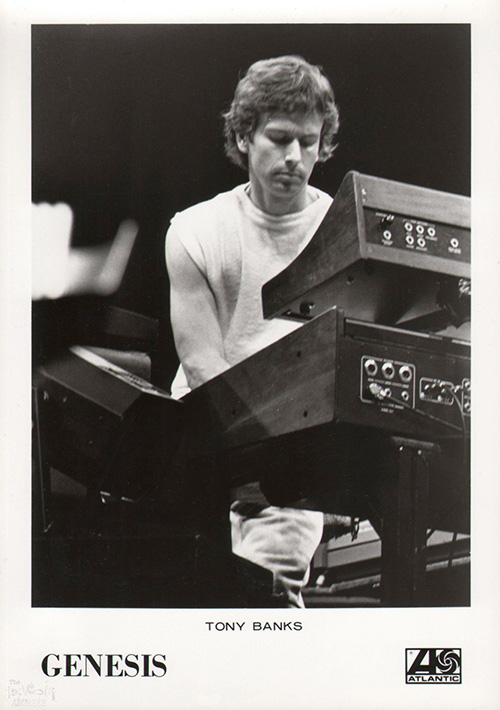
It’s funny, Mike and I went through exactly the same process with the solo albums: as I said, people couldn’t work out the contradiction between us not being the singer and everything. So I thought, “Well, I’ll give it a go!” I wrote the lyrics, made the melodies so that I could sing them – I didn’t make them too extravagant – and had a go. I did some demos which didn’t sound too bad – I had to find a way of projecting my voice that worked, and in the studio it seemed to work okay. I’ve got a naturally soft, sweet voice, if you like, like Neil Tennant’s, which works okay on some things, but then I wanted to try and do a little more attacking with the vocals – I got used to that with Phil and Peter – and, by using compressors and stuff, I’ve managed to get a certain sound that I was happy with. The album didn’t meet with universal approval, but a lot of songs on it are good, and in terms of the vocals it works. And as you say, because it’s personal in that way, a lot of people liked what I’d done: perhaps, it’s a little bit simpler, musically, than what I’d been doing prior to that, but it was something I wanted to try, and I was pretty pleased with the result.
– “This Is Love” and “And The Wheels Keep Turning” could have been hits, but they didn’t chart. Do you think it was because people expected something different from you?
I don’t really know. To have a hit, you’ve got to get played on radio and everything, and that just didn’t happen. I released “This Is Love” as a single, but it didn’t get any play; then we released an edited version of “The Wheels Keep Turning” – and that did get a bit of play, but not enough. It was just very difficult to get noticed. It was a funny old time as well, because pop music seemed to be very focused on a lot more simplicity, and also punk had come in, so I don’t think I was appealing in that kind of way outside the GENESIS audience. Initially, when I first did the record, Stiff Records, who were at the time quite a trendy label who had MADNESS and others, were interested when they heard the album, but when they met me – with long hair and in woolly coat and scarf – they were no longer interested because I didn’t fit what they wanted to see, and they didn’t feel they could mold me into what might have been a slightly more successful act. To be honest, I found it quite uncomfortable to be the lead singer: I did a video for “This Is Love” and I find pretty embarrassing to see myself do that. I’m not a natural to that. I was happy to play my music, but I didn’t really want to sing it, but it was fun to do that. And it taught me a lot about writing music for other people as well, so it was an interesting experience. Who knows – if it had been successful, maybe I would have done a bit more, but that wasn’t to be.
– Solo albums show artists in a different light and help people understand their contribution to the band they’re in. Do you think your solo albums achieved that goal?
I wasn’t necessarily trying to prove that point. “A Curious Feeling” is more similar to the GENESIS of the period, to “Wind & Wuthering”; “The Fugitive” was something a bit different. You have a certain way of working when you’re working with other people, and a lot of the time when I’m working with the others – I’m talking about GENESIS again – I’m bouncing ideas around the place. I might write something, which I wouldn’t necessarily have thought was worth pursuing on my own, but with the other two guys there, Mike might say, “Well, that’s really good!” – and things would emerge. A lot of the time I’ve started with something quite simple – it happened with things like “That’s All” or “No Son of Mine” – that I would not necessarily have pursued, but I came up with those ideas in the rehearsal room, and at that point people said, “Let’s work on that and see where it goes!” When on my own, I’m more critical; I like to try and avoid standard sequences and things like that – this is what appeals to me. I’ve always liked a few weird chords, as people know.
– There is an instrumental track on that album, “Thirty Three’s”: it uses the Linn drums, which were trendy at the time. Steve Hackett experimented with that a lot. Did you discuss this machine with him or just decided to try it on your own?
No, I didn’t talk to Steve about it, but I had a Linn drum machine as well – we all went through the drum machines. I used whatever was around. I wrote all of “A Curious Feeling” using the Roland drum machine, but then I replaced it with real drums, but on “The Fugitive” I kept quite a lot of the parts, on “By You” and other things. “By You” has real drums in it as well, and it seemed to be a good thing to do because it intertwined with the other keyboard instruments. It was summertime, and it sounded really good. But there’s also the other instrumental on that album, and “Charm” was done not with the Linn drums, as it happens: I used a little Casio thing, about this long (spread his hands a little) – it had a funny little drum sound on it, which I used as the basis for that particular piece.
– Around the same time, you contributed to “The Shout”: the movie soundtrack that’s being reissued now without your and Mike’s contributions – focused on Rupert Hine’s music. What was the arrangement there: Rupert did a half of it and you the other half?
Rupert’s stuff was weird electronic music, Mike had a little atmospheric piece, which was used throughout the film, and I wrote the theme [“From The Undertow”] – the main theme, if you like – that we played a couple of times and that became part of “A Curious Feeling” in the end. I think the story is well-known: I wrote it originally as an introduction to the song “Undertow” but we hadn’t used it on the version of it that we did on “And Then There Were Three..”; I had this bit left over, which I thought was quite good, so I changed it around and made it spooky, and it worked well with the film. Unfortunately, they kept covering it up with wind noise and stuff, and we had a few arguments with the director [Jerzy Skolimowski] about the way the music was used, but I think the piece was okay in there.
– So you didn’t really work with Rupert?
Never worked together, no, although, when we did the original theme, he was the producer. But I didn’t know that so much other stuff was going to be used: I did another version of that piece using the organ, that was actually used in the film as well – a church organ, which was quite amusing. You know, I quite enjoyed the experience and would have liked to have done a bit more of that kind of thing at the time, but I didn’t really have the options. Except, I was offered, and did, the Michael Winner film “The Wicked Lady” – I wrote the score much at the same time as I was doing “The Fugitive” and I had this little melodic piece that I thought probably wasn’t going to go on to the album, so I played it to Michael and he really liked it. I based the music around that, and I had a lot of help from the arranger, Christopher Palmer: I played incidental music on the piano to him, and he arranged it and made it sound good. And then he did a really nice version of the main theme, which was used in the middle of the film – during a soft porn sequence of this girl, well, getting it on; unfortunately, it was cut out of the cinema version, because it was considered a bit too racy, but it’s still there on the video version, and it seems very tame now. A fun experience, but it was a pretty terrible film, which didn’t help me much in terms of my film-writing career.
– Did you work off the script or were you shown the actual rushes of the film?
Shown the rushes. The director showed me the film as it stood, and I played him the theme; after that, we worked on the different bits. The trouble is, you work on a bit, and suddenly they want to add two seconds or take five seconds out, and of course, the whole musical part goes to pieces. I didn’t have time to do the whole project, so Christopher ended up writing some of the bits himself, which was slightly unsatisfactory but it had to be done.
– How did it feel to move into a pure composer’s role and to hear your music played by an orchestra for the first time?
The theme I’d written was okay, but it sounded much when it was played by an orchestra. What was interesting was that Christopher used just the main part of the theme in the middle of the film, but it was played about ten times with different arrangements, and it always felt good. I was quite excited by that, and I thought, in the back of my mind, “I’d love to do this sometime in the future!” But we, the group, were very busy at the time, and I didn’t feel it was going to happen anytime soon. If I could, I might do one or two more films. A project came up later on, to do the music to “2010 [The Year We Make Contact]” that I’d originally intended that to be orchestral, and I was kind of sacked from it, but that would have been quite interesting to do. So that didn’t happen, and I didn’t get back to an orchestra until after the group had finished.
– Did you ever flash back to that experience when you worked on your “Seven,” “Six” and Five” albums?
I did, a bit. That’s why I wanted to do “Seven” – because in the back of my mind I remembered how good that theme had sounded, and I thought, “Well, I’ve got other pieces that could sound like that!”. So that’s what I did. I put some things together that I’d had in the past and wrote a few new ones to see how it worked with an orchestra. It was a difficult transition, because I’m not accomplished enough to write the actual parts for an orchestra, so I had to use an arranger, but I tried to keep fairly much control on the actual compositions themselves. Initially, I went into the studio, and we recorded four of the tracks with the London Philharmonic Orchestra, and they sounded so terrible that I decided, “Maybe, I’m not going to do this. This is not much fun!” But I was persuaded to have another go at it, and I got a different conductor in, which made quite a difference. I also went in better prepared with the pieces, and we managed to get three or four of them sounding really good – some of the others didn’t sound quite how I’d hoped they’d sound, but that’s the way of it. When you’re working with an orchestra, you don’t get so much time: you’ve got eighty people, half of whom are not the slightest bit interested in what you’re doing, so it’s kind of a strange way of working, but you have a session of three hours and you hope in that period of time to get a ten-fifteen-minute piece done – which I did. It taught me a lot, and later on, I would be able to come back to doing orchestras, and I would have a better approach.
– Nick Ingman is credited with arrangements on the “Five” album, but who did the orchestration for “Seven” and “Six”?
I really enjoyed working on “Seven” with Simon Hale. Simon was someone suggested to me by [producer] Nick Davis, but then he became a sort of star in his own right, on Broadway. A guy called Paul Englishby worked on “Six” – I met him through Martin Robertson, who played sax and clarinet on some of my records, and I’ve known him since he was a child, and we got on well. Paul is very much a composer, he’s done lots of good writing of his own, and he did a great job on the pieces which have solo instruments – but in one or two cases, he wanted to take them a little further away from what I’d originally written: the structure was still a hundred per cent the same, but in terms of arrangement sometimes he went a bit different to what I would have chosen, which was why, when I got to doing “Five” with Nick Ingman, I used my original demos as a template, and a lot of what you hear on that is exactly what I would have done. In fact, I used the piano parts that I’d done on the demos, they made it all the way through, and we replaced all the other parts with real instruments, embellishing a bit of this and a bit of that. So “Five” was the closest to my original concept, and it is my favourite of them – but there’s lots of bits and pieces I like on all of them and throughout my career. It was a learning experience, and I just went through the process that I wanted to do.
– Would you be able to write orchestrations yourself?
I’ve not been trained to write for an orchestra, but I know an orchestra sounds, so I’m working at it from the other direction. What I’m able to do is play it with using instruments, because now, with the computer stuff, you’ve got all these instruments, so if I wanted a flute part, I’d play a flute part on it, but I just like to have someone there who’s worked with orchestras, understands what they can and can’t do and maybe is able to make it sit more comfortably. What you hear is pretty close to what I wrote. For example, my favorite piece on “Seven” is “Black Down” – an improvisation on which I used a string synthesizer, writing actual parts for various instruments in the orchestra, and if you listen to the demo of, say,”Prelude To A Million Years” [on “Five”] a lot of the parts are there: you’ve got a trumpet, you’ve got a string section… I could have done the album just replacing what I’d done, and it would still sound fairly authentic, but having an arranger to help it out a bit is a good thing. I don’t mind having the help: it’s like having a producer.
– Did you ever think of playing live with orchestra, of a recital?
I’ve never really wanted to play live with an orchestra – I feel a bit overawed by that – but there’ve been orchestral versions done of some of my pieces, and I’d like a bit more of that, but it’s difficult to get past the sort of natural prejudice there is against rock musicians doing classical music or orchestral music. The other day I went to a classical concert in London, to Wigmore Hall, and BRITTEN SINFONIA did a version of “Mad Mad Moon” sung by a classical singer [Sarah Connolly], which was nice, and on the same programme there was a suite done by John Paul Jones, so that world is open to other ideas, but it’s slightly difficult sometimes for us to break down the doors and for them to take the plunge.
– You’ve never played live as a solo artist, right?
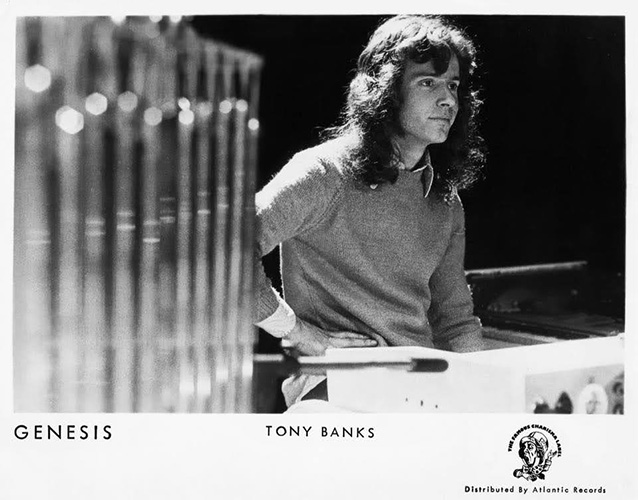
No, never done anything. I’ve never played on stage without GENESIS. It was never my aim. Again, I never thought of myself as a performer, I’m in this business as a writer – and if I could have had my whole career just as a writer, I’d have been quite happy with that. I originally started playing because no one else would play it. That’s how GENESIS started: we wanted to write for other people, but it looked like no one was going to do our music, so we decided to try it ourselves, and then, of course, we quite got into the idea of how you can make music if you do it yourself. But once you start playing and you know you’re going to play live, and you’re going to play your music, then you get experimental with what you do and you play things that you would never expect anyone else to play. I enjoyed doing that, particularly in those early days of GENESIS when we did a lot of weird things, which was a lot of fun.
Also, “Strictly Inc.” had on it one of the pieces I’m very proud of, “An Island In The Darkness” – I wanted it to be expansive and I was able to evolve it into a fifteen-minute track which recalled the early GENESIS a little – where some bits were almost semi-improvised. There’s a bit of piano in the middle there: I just was fooling around and came up with this thing, but then I had to relearn it, get rid of a few of the bum notes and play it again. I really enjoyed doing that, and what was nice – which I enjoyed doing with the early GENESIS as well – was having a chance to build ideas. You start, you go somewhere and you go somewhere else, and then you come with a big climax towards the end, like we did with “Supper’s Ready” or “Firth Of Fifth” – and I did that with “An Island In The Darkness”! Of all the things I’ve ever done, “Still” – the album that came before that – was the best chance I ever had of having some kind of commercial success. The record company was very keen on the songs I did with Nick Kershaw, “I Wanna Change The Score” in particular, but no one would play it – and if it doesn’t get played, no one hears it, so it never got anywhere.
– When you invited Nick Kershaw to work together, was it a purely artistic decision or you aimed for commercial success as well?
Not really. I already mentioned his album “The Works” – there was a song called “Cowboys & Indians” on it that I thought was fantastic, so after I’d got in touch with Vinnie Colaiuta and he was up for working with me, I talked to Nick about whether he might be interested. He said, “Yeah, why not?” – and we did two or three songs together. He was great fun to work with, he’s an up kind of chap. And a very musical chap – he’s got a natural ear: he would sing, then harmonize and ask, “You want this harmony or do you want that one?” And he’d just do it straight off his bat. On that album, I was able to work with Fish again: we’d had a good time doing an earlier piece [“Short Cut To Somewhere” on “Soundtracks”], but on “Still” we had two pieces. He sang “Angel Face” absolutely as I’d written, which kind of was quite difficult for him, but once he got it together, it sounded great; and then I’d written some lyrics and hints of melody for “Another Murder Of A Day” and let him loose, because Fish is one of those singers who like to sing what comes out of their mouth naturally and don’t want to be guided too much. Some of the bits were definite there, and he had to sing certain things, particularly towards the end, but earlier on, it was kind of “Just see what happens” – and I think that worked quite well.
– You also had Toya and Jim Diamond on “Soundtracks/”
Toya was suggested to me by the publishing company guy, and I thought she was not going to be interested, because at the time she was in the sort of punk world, if you like, quite trendy and everything, and I was anything but. But we met up anyway and got on well; she liked the piece [ “Lion Of Symmetry”] and did a great job on it. What was interesting about it was that she wrote a whole lyric for the thing, which I thought was fine, and then she said, “I don’t like it!” – and wrote another. Again, I tried to let her improvise a bit towards the end, which I think she found quite difficult. It was quite fun with Toya to try and stretch her singing a little bit: on her own work up to that point, she hadn’t really used her voice to the extent she could – and she got a great voice and could do lots of things with it. Her voice, particularly her soft voice, was beautiful in the middle part of that song. It was my first experience working with a female singer, and as a writer, I was always interested in the idea of working with a female voice because it’s very different. Obviously, I did it again with Jayney Klimek on the next two albums.
– Toya was basically her voicing your piece. But when you worked with Jayney you seemed to try to write from a female perspective.
Yeah, “Queen Of Darkness” was written that way, and it was quite funny: I thought I’d write from the female point of view and just see how it worked. It seemed a bit strange, so I said to Jayney, “Are you comfortable singing this?” Of all the performances she did with me, the best one was definitely “Water Out Of Wine” of which I was very proud of at the time – I still am, actually. It’s a slightly depressing song, I suppose, but it was lovely to have that sort of female tone – it seemed to suit this song much better. Having worked all the time with men, I found it a lovely thing to be able to write in a different kind of way.
– And how did you end up singing yourself on “Big Man” on “Bankstatement”?
There were lots of reasons. One is, I wasn’t sure it suited anybody else’s voice. Then, I was Big Man, and the idea of someone totally incompetent taking control of the situation was funny because that was pretty much how I saw myself as a singer. Also, I wanted to sing one or two pieces, so I’d done a demo of it, which sounded all right, so I thought, “I’ll do that!” It was never going to be a single anyhow, so it didn’t really matter. I didn’t have to worry too much.
– You very rarely contribute to other people’s records, but there are two that I wanted to ask you about. One is “Amores Pasados” by John Potter.
John Potter was an admirer of GENESIS, so he approached me with these ancient Thomas Campion poems and suggested I try to write for it, which I found easy to do. Originally, I thought, “I’ve got a few things around, so I’ll try and make it work with one of those..” – but that wasn’t happening. So I used the poem, and played it to see what came, and music came quite quickly and quite easily. I’d never really worked that way, with a lyric first, and it was interesting to be working with a totally different kind of music and trying to make the words fit, because those poems weren’t easy to wrap around a single melody – you had to vary the melody a lot to suit the lyric, which I found fascinating. A couple of the pieces ended up on that John Potter album, but there’s another one that I wrote for him, which has never been recorded and which they have sung live a few times: hopefully, they get to it at some point, because I think it’s better than both of those.
I’m against doing that kind of thing again, so there was the Brian Coombes thing ["The Last Pink Glow" by ROCKING HORSE MUSIC CLUB], which came up more recently through Richard MacPhail, a longstanding friend and supporte, who’s unfortunately no longer with us. He brought Brian down, and he gave me this idea that came from [Jack Kerouac’s “The Haunted Life”]; we talked about doing something, and I wrote [the album’s title track]. I was originally going to try and write to the actual words they’d got, but I couldn’t do it, so I just took the atmosphere of the book and wrote a piece that worked with it – and they sang it and performed it very well. I just love doing little projects like this!
– I’ve just received a .pdf of a book dedicated to you. How does it feel to be a subject of such a tome?
I know about it – it was originally written in Italian – but I won’t read it because I know there will be things in there that I won’t agree with. It’s better not to worry about it. But anyhow, that’s very nice.

