


Hacktrax 2026
Between idyll and turmoil: English composer locates lyricism in time and space.
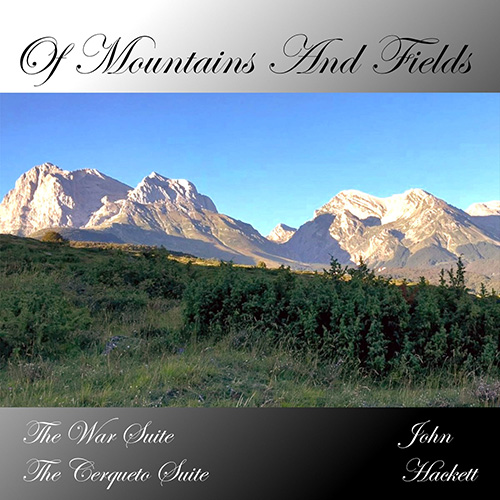
Of Mountains And Fields
Largely known for his rock liaisons, not least with two GENESIS guitarists, and even leading a prog ensemble of his own in recent years, John Hackett has always objected to being defined by any particular genre, while consistently gravitating towards classical music. But whereas his previous solo efforts in such a vein tended to sound limited in their performative scope, which emphasized the sentimental richness the flautist offered on 2000’s "Sketches Of Satie" and "Velvet Afternoon" from 2004, “Of Mountains And Fields” is as vast in aural terms as its title suggests. Tapping into the romantic tradition, first and foremost of the Grieg sort, Hackett came up with what can amount to symphonic poems, one honoring heroes of the First World War by telling the story of a soldier and the other celebrating an Italian village that John used to frequent and love. All this required sweeping strings and soaring winds, and thankfully modern technology provided the veteran with the means to realize his reveries.
Neither of the two suites is presented as a whole piece, however – each of them includes shorter movements that elevate their inner variety – and as the passages of John’s reeds gently weave into the tapestry he created via samples of the BBC Symphony Orchestra, which appear as natural as the opuses’ subjects dictate, it’s impossible not to surrender to the overall grandeur of his melodies.
Subtly touching the listener’s very psyche, “Country Dance” ushers the audience into “War Suite” with subdued solemnity until “Enlistment” brings brass to the fore to introduce drama in contrast to the elegiac flow the flute’s trills blow to exquisite smithereens in “Estaminet” in an impressively lighthearted manner. So when the waves of “Despair” demolish the ballroom walls and, dropping to near-silence, turn the drift to tragedy, the emotional effect and the dynamic shift feel more than simply stirring – they seem soul-shattering, and “Where Poppies Grow” logically wraps its lament in the expansive glory of the fluttering bows. Still, “Demobbed” restores pastoral magnificence with bolder strokes, and “To Have And To Hold” reflects the peace and happiness in the aftermath of global disaster by unfolding a magnificent hymn to deliver a cathartic finale.
There are no wedding bells in it, but their peals fill “Il Gran” to challenge the bucolic setting of “Cerqueto Suite” in which Hackett’s roulades lead the rest of the instruments more obviously, even when John’s immediate playing is concealed behind the scenes in the likes of “Il Museo” that occasionally approach Vivaldi’s ethereal elegance. Yet if “La Capanna” ventures deeper into European history to access frilly Renaissance discipline, slyly “Il Bar” deploys histrionic joviality to end up majestic, and “La Fontana” transmogrifies folk motifs into ceremonial swirl. With nigh-unbearable beauty permeating “La Chiesa Di Santa Reparata” – whose ripples unexpectedly subside to bare piano chords – and with John Hackett left center-stage in “Il Gran Sasso Al Crepuscolo” that, dissolving into bells and then silence, winds down the magic, the sense of bliss and the scent of sweet fatigue descend onto the sonic spectator. A major work from an underestimated contemporary master.
*****

