


Axx / Towerman 2026
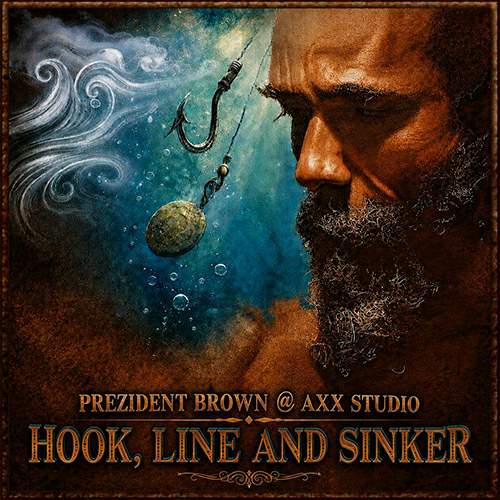
Hook, Line And Sinker
Getting old sounds out of his system, Jamaican journeyman skanks it easy, from roots to branches and beyond.
Little had been heard from Prezident Brown in about a decade – probably because some other president hogged the limelight and wavelength – but he couldn’t keep silent after “Roots Hop Reggae (In Your Box)” was out in 2024, and the cache of songs laid down between 2006 and 2009 in Portland Parish became orphaned. Upon hearing to them, one can understand why. Apparently, that period found the artist mellowing a bit: a singer who once channeled his ire in “Hurt Dem Belly” and “To Be Poor Is A Crime” to address social sores traded his erstwhile fire for less inflammatory lyrics and less incendiary riddims. There are highly charged numbers on this album, yet the platter is more of a glossy magazine covering various topics than a magazine holding cartridges and focused on hitting the target.
As tracks such as “Disarm The Weapon (M-16)” rub shoulders here with the likes of “Play This Song (Mr. DJ),” which features Lenny I – the purely entertaining, vocoder-spiced latter being the only piece on offer that has seen the light of day before, and the former an economically arranged, belligerent smash – the audience may find it difficult to feel the force of Brown’s messages and easy to simply get in the spirit of his melodic missives. Whereas the drier, and thus punchier, “Hail Rastafari Forevermore” will leave the listener begging for similar spiritual chants, the brass-splashed, infectious “Los Cabos (El Prezidente Cafe)” gets too relaxed sailing across the Caribbean to come ashore in Cancún. Still, the scintillating titular cut seems rather irresistible, especially when the song’s sonics dive into dub at the end, and “Let The Guns Kill No More” is as rootsy as only genuine Jamaicans are able to deliver. But if “I’m Calling” demonstrates the veteran’s romanticism with a lot of taste, “Babylon Lose” indeed loses momentum to contemporary R&B tropes, except on the refrains, as does “Golden Rose” despite all the catchiness on display.
However, when “On The Wire” shifts the drift from Latin dance to ska, smiles are guaranteed, so even the pop angle of “Come Over” that compromises its rocksteady jive won’t remove the jovial mood, which reigns at the record’s end. For all their incongruity, it was worth dusting off these cuts.
***4/5


