


DGM / Panegyric 2026
The debris and the metaphors come forth to steer the Seven-Headed Beast into another spell of life.
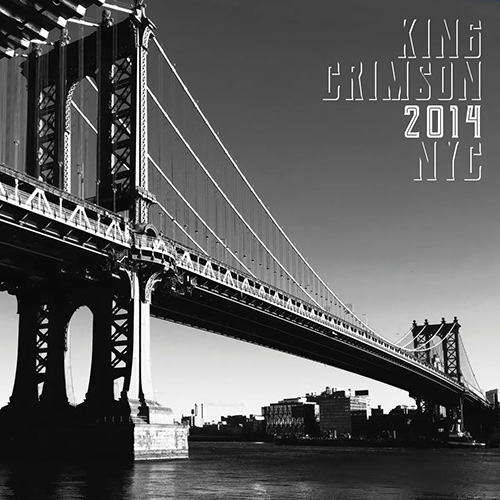
2014 NYC
When the dormant ensemble emerged into existence again to re-enter the stage in 2014, it awakened a sense of awe: while the double-trio which burst onto the scene one decade earlier seemed impressive, the septet whose front was formed from three drummers looked – if not exactly felt – like a squad equipped with a battering ram. They would turn up the usual menace up to eleven in a year, when this scribe witnessed the veterans in Toronto – and can testify that the album commemorating their Ontarian spell failed to reflect the sheer scope of the group’s sonic attack – but when they descended onto the Big Apple, as documented here, the shock of seeing the fresh line-up got wondrously dampened by the collective’s choice of a setlist. As the material dictated the dynamics, the listeners experienced a fair share of surprises not captured on “Live At The Orpheum” – recorded about ten days later – so to access the prog purveyors’ entire show, sculpted out of their four-night stint in Manhattan, is akin to a revelation.
It’s not even that the hydra-esque band reintroduced to their concert repertoire such long-abandoned pieces as “Pictures Of A City” – where else, but in New York, could this groovy relic from "In The Wake Of Poseidon" come alive so gloriously? – or “The Sailor’s Tale” and “The Letters” which the ensemble hadn’t performed since their "Islands" and deliver now in stunning detail. And it’s not that they gave a hydraulic lift to most of the "Red" tracks, including the furious “One More Red Nightmare” which had never been done in front of the audience, and informed the original duplet of the titular tour-de-force from "Larks' Tongues In Aspic" with new-fangled ferocity as well as romantic six-string twists and flute-flaunting turns the expanded cast imagined on the fly. It’s that the collective molded their past into present with rare elegance, and presented the convergence of two periods of time via delving, for the first time ever, into the members’ side affair. By bringing up a pair of airy pieces off “A Scarcity Of Miracles” – a title song and “The Light Of Day” – which Robert Fripp concocted in the company of Mel Collins and Jakko Jakszyk, both of whom joined the group’s ranks in 2013 and stayed until the end – the combo softened the blow of their earth-shattering aural assault and exposed their previously concealed emotional vulnerability.
The cover artwork should also be factored in: before, the monochrome photos which were used for this purpose showed only the musicians, not the setting, so here the visual austerity must serve as a reminder of the sharpness the septet’s focus often possessed. As percussive interplay – a beat-feast courtesy of Pat Mastelotto, Bill Rieflin and Gavin Harrison, climaxing quite logically on “The Talking Drum” and still reigning atmospherically supreme on “Banshee Legs Bell Hassle” – and regular rhythmic shifts render the results of their melodic efforts thrilling, the ensemble’s inherent threat and doom are relegated to gloomier corners of “The Hell Hounds Of Krim” and other improvs. The erstwhile edge is sharpened too, the post-millennial wigouts “Level Five” and “The ConstruKction Of Light” rippling and raging in style in the crossfire of Jakszyk and Fripp’s guitars and the rumble of Tony Levin’s bass, but the blasting of an inept reporter’s attempt to define the gist of the group results in light relief, eliciting laughter from the punters, whereas “VROOOM” demonstrates almost equal jovial levity. Once Jakko’s voice and Mel’s saxes added unexpectedly relaxed facets to “Starless” and “21st Century Schizoid Man” – a full-circle maneuver liking the band’s latest start to their beginning – and the beautiful noise died down, glimpses of ghosts appear, of spirits able to transform the Seven-Headed Beast into a different entity yet electing to retain their strangely appealing character.
A truly unique offering.
*****


